

Best Cannabis Strains for Pain: Science-Based Guide
Discover the best cannabis strains for pain relief backed by 2025 terpene research, CB2 science, and our High Family classification system.

Professor High
50 Million Americans in Pain, and the Dispensary Menu Is Not Helping
Roughly 50 million adults in the United States live with chronic pain. That makes it more common than diabetes, heart disease, and cancer combined. And when these people walk into a dispensary looking for relief, most of them hear the same thing: “Try an indica.”
That advice is about as useful as telling someone with a headache to “take a pill.” Which pill? What dose? For what kind of headache? The indica/sativa distinction tells you almost nothing about how a strain will interact with your pain. It is a classification based on plant shape, not chemistry. Two “indicas” can have wildly different terpene profiles and produce completely opposite effects in your body.
This is the gap that frustrates pain patients more than anything else. You are dealing with a serious quality-of-life issue, and the guidance you receive at the dispensary counter is barely a step above guessing.
This guide is designed to close that gap. We are going to walk through what the latest research says about cannabis and pain, explain which terpenes and cannabinoid ratios the science actually points to, and recommend specific strains organized by pain type. No vague generalizations. No “just try this.” Real science, real strains, real strategy.

Why Terpenes Matter More Than Indica vs. Sativa
If you have been shopping for pain relief based on indica/sativa labels, you have been using the wrong map. Here is the model that actually matters.
Every cannabis strain produces a unique cocktail of terpenes---aromatic compounds that do far more than create flavor and smell. These molecules have their own biological activity. They interact with your endocannabinoid system, your opioid pathways, your inflammatory signaling cascades, and your neurotransmitter receptors. The specific terpenes in a strain shape how it makes you feel at least as much as its THC or CBD content.
This is why two strains with identical THC percentages can produce radically different experiences. One might ease the ache in your lower back while keeping you mentally sharp. Another might make you foggy and anxious without touching the pain at all. The difference? Terpene profile.
Leafly, Weedmaps, and most dispensary menus still organize strains by indica, sativa, and hybrid. That framework was never designed to help you manage pain. Our High Families system classifies strains by their dominant terpene profiles, which means you can actually match chemistry to your specific needs. It is the difference between a filing system based on the color of the folder and one based on what is actually inside.
The Science Layer: What 2025 Research Tells Us About Cannabis and Pain
This is where things get interesting, and where this guide diverges from the generic strain lists you will find elsewhere. Let us look at what the research actually says.
Government-Level Evidence: The AHRQ Living Systematic Review
The Agency for Healthcare Research and Quality (AHRQ) has been publishing annual systematic reviews of cannabis for chronic pain since 2022. Their 2025 update---the fourth in the series---confirms what pain patients have been reporting for years: cannabis-based products provide small to moderate benefit for chronic pain, with the strongest evidence supporting use in chronic neuropathic pain (AHRQ, 2025).
This is significant because systematic reviews sit at the top of the evidence hierarchy. This is not a single small study. This is the U.S. government’s own research body saying, after four years of continuous evaluation, that the evidence is real.
The Terpene Pain Revolution: 6 Molecules You Need to Know
A landmark 2025 review published in Phytochemistry Reviews examined the analgesic mechanisms of six key cannabis terpenes. The findings suggest that terpenes are not just supporting actors in pain relief---they may be co-stars (PMC, 2025).
Here is what the research found for each:
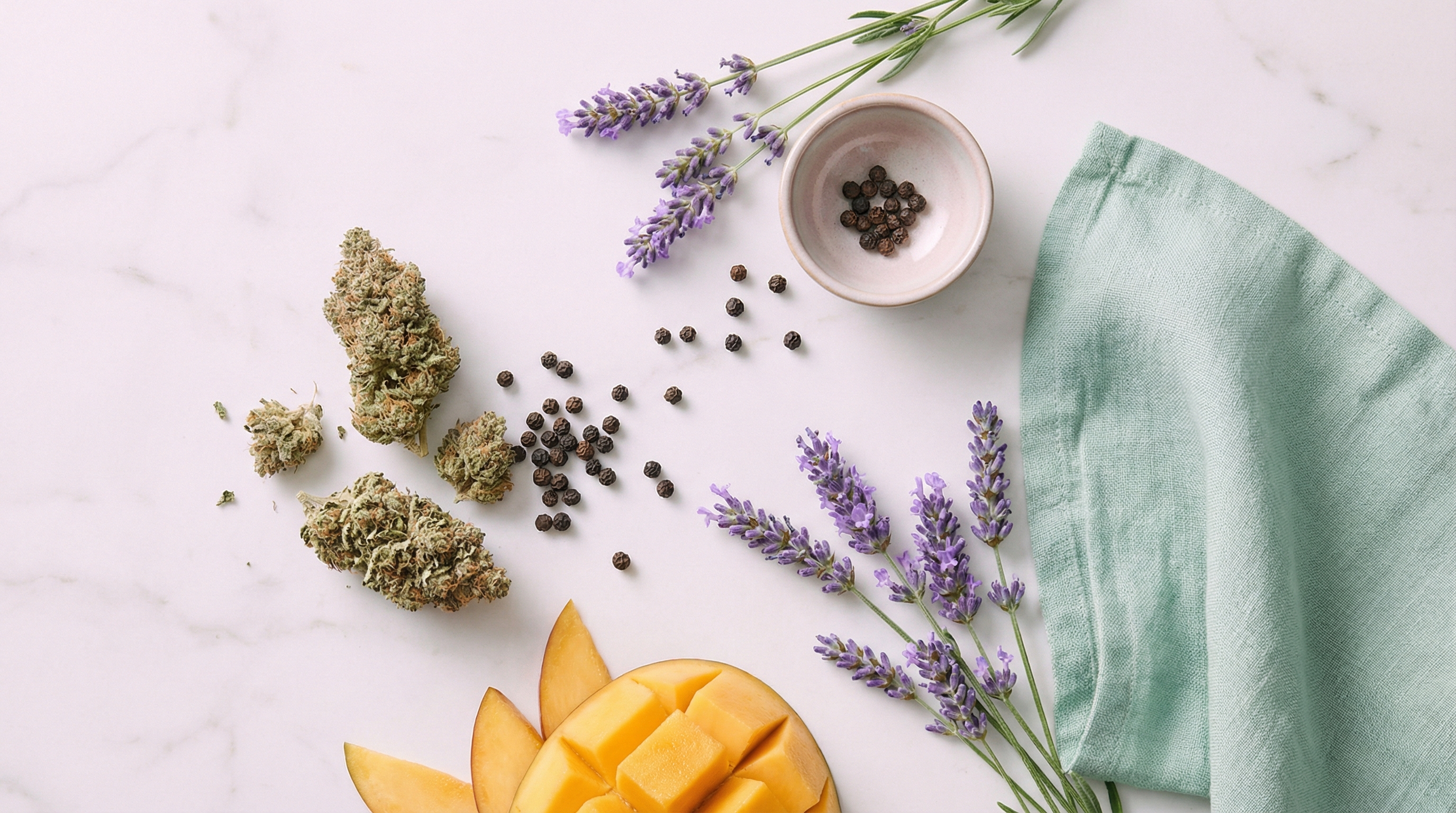
Beta-caryophyllene is the standout. It is the only terpene that directly binds to CB2 receptors, making it a functional cannabinoid that you can find in black pepper, cloves, and cannabis. In a clinical study of 38 patients with knee osteoarthritis, beta-caryophyllene (BCP) significantly reduced pain scores. Perhaps most remarkably, research shows that BCP “enhances morphine efficacy at sub-therapeutic doses,” meaning it may allow lower doses of pain medication to remain effective (PMC, 2025). Read more in our deep dive on caryophyllene.
Myrcene is the most abundant terpene in cannabis, comprising up to 65% of some strains’ terpene profiles. Its analgesic effects are naloxone-reversible, which means it works through opioid pathways---the same system targeted by morphine and other prescription painkillers, but through a gentler, plant-based mechanism. Myrcene also acts as a muscle relaxant, which is why myrcene-dominant strains produce that deep body heaviness (PMC, 2025). Learn more about myrcene and its sedating properties.
Linalool brings a fascinating mechanism to the table. Research shows it “modulates glutamatergic transmission by non-competitively inhibiting NMDA receptors”---the same receptor system targeted by ketamine, which is increasingly used for chronic pain treatment (PMC, 2025). Clinical studies on linalool-rich lavender oil have demonstrated benefits for musculoskeletal pain. Explore our guide to linalool’s calming properties.
Pinene fights pain primarily through anti-inflammatory pathways, specifically by inhibiting NF-kB---a master switch that controls the expression of inflammatory genes. When NF-kB is overactive, inflammation ramps up and pain follows. Pinene helps keep this system in check (PMC, 2025). See our pinene guide for more.
Limonene produced striking results in a topical application study: 78% of plantar fasciitis patients experienced 85% or greater pain reduction when treated with limonene-containing topicals (PMC, 2025). While this study used concentrated topical application rather than inhaled cannabis, it demonstrates limonene’s potent analgesic potential. Read about limonene’s mood-elevating effects.
Humulene shares structural similarities with caryophyllene and contributes anti-inflammatory effects that complement the overall pain-relief profile of full-spectrum cannabis.
Clinical Practice Guidelines: How Doctors Are Using Cannabis for Pain
The 2024-2025 clinical practice guidelines from the American College of Physicians provide concrete recommendations for physicians considering cannabis for chronic noncancer pain:
- Start with CBD-dominant formulations first, then add THC incrementally
- Oral administration is preferred over smoking for pain management
- Best evidence exists for neuropathic pain, multiple sclerosis spasticity, and HIV-associated neuropathy
- For arthritis pain, a balanced THC:CBD ratio starting around 15mg of each is a reasonable entry point
- “Start low, go slow” remains the universal dosing principle
The NIH’s National Center for Complementary and Integrative Health (NCCIH) is actively funding research into terpene analgesic mechanisms as of 2025, signaling that the scientific establishment recognizes the therapeutic potential of these compounds (NCCIH, 2025).
Matching Pain Types to Cannabis Approaches
Not all pain responds to the same strategy. Here is what the evidence suggests for each major category:
| Pain Type | Best Cannabis Approach | Key Terpenes | Evidence Level |
|---|---|---|---|
| Neuropathic (nerve damage, diabetic neuropathy, shingles) | THC-dominant or balanced THC:CBD | Linalool, caryophyllene | Moderate (multiple RCTs) |
| Inflammatory (arthritis, autoimmune, injury) | Balanced THC:CBD, high caryophyllene | Caryophyllene, pinene, humulene | Emerging (clinical + animal studies) |
| Muscle/tension (back pain, spasm, overuse) | High myrcene strains | Myrcene, linalool | Preliminary (observational + mechanistic) |
| Centralized/fibromyalgia (widespread, multi-system) | Full-spectrum, multi-terpene | Diverse profile | Theoretical (entourage effect hypothesis) |
The Best Cannabis Strains for Pain Management
Now let us get specific. These recommendations are organized by pain type and grounded in the terpene science outlined above. Each strain links to its full profile page where you can explore its complete terpene and cannabinoid data.
For Inflammatory Pain: Caryophyllene-Rich Strains
If your pain involves inflammation---arthritis, joint swelling, autoimmune flare-ups, injury recovery---prioritize strains rich in beta-caryophyllene. These activate CB2 receptors directly, targeting the inflammatory component of pain at its source. This is the Relieving High family.
Girl Scout Cookies --- One of the highest caryophyllene producers in the cannabis world. GSC delivers potent body-focused relief with enough cerebral engagement to keep you present. The combination of caryophyllene and limonene creates both anti-inflammatory action and mood elevation, which matters when chronic pain drags your spirits down.
OG Kush --- The caryophyllene-myrcene combination in OG Kush provides a one-two punch: CB2-mediated anti-inflammatory action from the caryophyllene paired with opioid-pathway analgesia from the myrcene. This is a workhorse strain for physical discomfort.
Bubba Kush --- Deep, heavy body relief with a caryophyllene-forward profile. Bubba Kush is best reserved for evenings when you need serious physical relief and do not mind settling into the couch.
Original Glue (GG4) --- Heavy caryophyllene content makes GG4 one of the most frequently recommended strains for physical pain. The intensity is real---this is not a daytime strain for most people---but for severe inflammatory pain, it is hard to beat.
Wedding Cake --- A complex terpene profile that includes significant caryophyllene alongside linalool and limonene. Wedding Cake tends to provide relief that builds gradually and lasts, which is useful for pain that persists throughout the evening.
For Muscle Tension and Body Pain: Myrcene-Dominant Strains
When the pain lives in your muscles---lower back tension, shoulder knots, post-workout soreness, spasms---look for strains where myrcene leads the terpene profile. Myrcene’s opioid-pathway analgesia and muscle relaxant properties make it the go-to terpene for this category. These strains often fall into the Relaxing High family.
Granddaddy Purple --- The myrcene-linalool combination is almost purpose-built for body pain. GDP delivers physical relaxation that starts in your extremities and works inward, paired with linalool’s NMDA-receptor modulation for an additional analgesic layer.
Northern Lights --- A classic for a reason. Northern Lights has been the go-to body relaxation strain for decades, and its myrcene-dominant terpene profile explains why. Clean, predictable physical relief without much mental fog.
Purple Kush --- Deep physical relief with a heavy myrcene presence. Purple Kush is best suited for nighttime use when muscle pain is preventing you from sleeping.
Grape Ape --- Myrcene-heavy sedation that works well for severe muscle tension. The gradual onset makes it easier to dial in your dose---you feel it building rather than hitting all at once.
For Nerve Pain: THC-Forward Strains With Supporting Terpenes
Neuropathic pain has the strongest evidence base for cannabis treatment, with multiple randomized controlled trials supporting THC’s ability to modulate pain signaling in the brain. These strains offer meaningful THC content paired with terpenes that support the analgesic effect.
White Widow --- Balanced genetics with enough THC to address nerve pain signaling, paired with a terpene profile that includes caryophyllene for anti-inflammatory support. White Widow tends to produce clear-headed effects, which makes it workable for daytime use.
Jack Herer --- Rich in pinene, which provides anti-inflammatory action through NF-kB inhibition while also preserving mental clarity and alertness. Jack Herer is the pain strain for people who refuse to sacrifice cognitive function. Part of the Uplifting High family.
Blue Dream --- The versatility of Blue Dream makes it a strong option for nerve pain patients who are still figuring out what works. Its balanced terpene profile provides moderate relief across multiple pathways without pushing too hard in any single direction.
For Daytime Pain Management: CBD-Forward Functional Strains
The clinical guidelines are clear: start with CBD-dominant formulations first, especially if you need to remain functional. These strains provide pain relief with minimal intoxication, making them suitable for work, errands, and daily responsibilities.
ACDC --- With CBD:THC ratios as high as 20:1, ACDC provides substantial anti-inflammatory and analgesic benefit without significant psychoactive effects. This is the strain for people who need to manage pain during a workday or while caring for children.
Harlequin --- Typically running around 5:2 CBD:THC, Harlequin hits the sweet spot between functional and effective. You may notice mild mood elevation, but cognitive function stays largely intact. Excellent for inflammatory pain during daytime hours.
Cannatonic --- Another high-CBD option that works well for pain patients who are sensitive to THC or who are following the clinical guideline of starting CBD-dominant before adding THC.
For Complex, Multi-Symptom Pain: Multi-Terpene Entourage Strains
Conditions like fibromyalgia, chronic fatigue with pain, and pain accompanied by anxiety or insomnia often require a broader approach. Single-terpene-dominant strains may address one dimension of the problem while leaving others untouched. The Entourage High family features strains with multiple terpenes present in meaningful concentrations, maximizing the entourage effect.
Gelato --- A multi-terpene powerhouse with significant amounts of caryophyllene, limonene, linalool, and myrcene. Gelato engages multiple pain pathways simultaneously, making it a strong candidate for complex pain conditions where inflammation, nerve sensitivity, and muscle tension overlap.
Zkittlez --- Known for its remarkably diverse terpene profile, Zkittlez provides broad-spectrum relief that many patients with multi-symptom conditions find effective. The varied terpene content means multiple mechanisms are engaged at once.

The Pivot: Why Your Response Matters More Than the Strain Name
Here is the truth that no strain recommendation list will tell you: the strain matters less than how YOUR body responds to its terpene profile.
Two people can consume the exact same strain and have completely different pain outcomes. Your endocannabinoid system is as unique as your fingerprint. Your CB2 receptor density, your baseline inflammation levels, your metabolism, your tolerance history, the type and severity of your pain---all of these variables shape whether a given strain helps or does not.
This is why the real strategy is not finding the “best” pain strain and sticking with it forever. The real strategy is:
- Start with the terpene profiles recommended for your pain type (the categories above)
- Try strains from the relevant High Families to identify which terpene combinations your body responds to best
- Track your results systematically---strain name, terpene profile, dose, timing, pain level before and after, duration of relief
- Rotate strains to prevent tolerance buildup and maintain effectiveness
This pattern-recognition approach is exactly what the High IQ app is designed for. Instead of guessing, you build a personal dataset that reveals your optimal terpene targets over time. The strains listed above are starting points. Your body’s response data is the real guide.
Dosing Strategy: Start Low, Go Slow
Regardless of which strain you choose, dosing is where most pain patients either succeed or fail. The clinical research is consistent on this point: cannabis and pain follow a biphasic dose-response curve. Low to moderate doses may reduce pain, while higher doses can actually increase pain sensitivity or trigger anxiety that amplifies the pain experience.
Practical dosing framework:
- Inhalation: Start with one or two small puffs. Wait 15 minutes before considering more. The onset is rapid, which makes dose titration easier.
- Edibles: Begin at 2.5-5mg THC. Wait a full 90-120 minutes before re-dosing. Edibles hit harder due to hepatic first-pass metabolism converting THC to the more potent 11-hydroxy-THC.
- CBD-dominant products: You can start higher, around 10-25mg CBD, since the psychoactive ceiling is much lower.
- Balanced THC:CBD: For arthritis and inflammatory pain, the clinical guidelines suggest starting around 15mg each of THC and CBD, adjusting from there.
- Consumption method: Oral administration is generally preferred over smoking for sustained pain management, per the 2024-2025 clinical practice guidelines.
Rotation strategy: Some evidence suggests that using the same strain repeatedly accelerates tolerance development. Rotating between 2-3 strains from different High Families can help maintain effectiveness over time.
FAQs
Is indica or sativa better for pain?
Neither label reliably predicts pain-relieving potential. Indica and sativa describe plant morphology---leaf shape, growth pattern, flowering time---not chemical composition. A “sativa” rich in caryophyllene and myrcene may be significantly more effective for pain than an “indica” with a weak terpene profile. Focus on terpene profiles and cannabinoid ratios instead. Our High Families system organizes strains by their actual chemistry, which is what determines their effects.
Can CBD alone help with pain?
Yes, but it depends on the pain type. CBD has demonstrated anti-inflammatory properties and may help with conditions like arthritis, muscle soreness, and some types of neuropathic pain. However, the research suggests that CBD combined with at least some THC tends to produce better pain outcomes than CBD alone, likely due to the entourage effect. Strains like ACDC and Harlequin offer high CBD with minimal THC, which many patients find to be an effective middle ground.
How does cannabis compare to opioids for pain management?
Cannabis and opioids work through different but sometimes overlapping mechanisms. The 2025 terpene research is particularly interesting here: myrcene’s analgesic effects are naloxone-reversible, meaning they operate through opioid pathways, and beta-caryophyllene has been shown to enhance morphine efficacy at sub-therapeutic doses. Cannabis is not a direct replacement for opioids in severe acute pain, but research suggests it may help some patients reduce opioid doses when used as part of a comprehensive pain management plan. Always work with your healthcare provider before making any changes to pain medication.
Will I develop tolerance to cannabis for pain relief?
Yes, tolerance can develop, particularly to THC’s analgesic effects. This is why strain rotation and periodic tolerance breaks are recommended. Rotating between strains with different terpene profiles---for example, alternating between a caryophyllene-dominant Relieving High strain and a myrcene-dominant Relaxing High strain---may help maintain effectiveness by engaging different receptor pathways.
What is the best way to dose cannabis for pain?
Follow the clinical guideline of “start low, go slow.” Begin with a CBD-dominant product if you are new to cannabis, then incrementally add THC. For inhalation, start with 1-2 puffs and wait 15 minutes. For edibles, start at 2.5-5mg THC and wait at least 90 minutes. Track your results---strain, dose, timing, pain levels---so you can identify your personal effective range. The goal is the minimum effective dose, not the maximum tolerable one.
The Bottom Line
Pain management with cannabis is not about finding a single miracle strain. It is about understanding the terpene science, matching your pain type to the right chemical profile, starting conservatively with your dosing, and systematically tracking what works for your unique biology.
The strains in this guide---from caryophyllene-rich options like Girl Scout Cookies and OG Kush for inflammation, to myrcene-dominant choices like Granddaddy Purple for muscle tension, to CBD-forward strains like ACDC for functional daytime relief---are starting points grounded in real science. But your body is the final authority.
Explore the High Families to find your starting point. Check out our deep dives on caryophyllene, myrcene, and linalool for more terpene science. And if you are also managing sleep issues from pain, anxiety alongside pain, or recovery from physical activity, we have science-backed guides for those too.
Important disclaimer: Cannabis is not a substitute for medical care. The information in this article is educational and should not replace the advice of a qualified healthcare provider. If you are managing chronic pain, especially alongside other medications, consult with your doctor before incorporating cannabis into your pain management strategy.
Sources
- Agency for Healthcare Research and Quality (AHRQ). “Living Systematic Review on Cannabis and Chronic Pain: 2025 Update.” Fourth annual update. Evidence confirms small to moderate benefit for chronic neuropathic pain.
- PMC Phytochemistry Reviews. “Phytochemical Modulators of Nociception and Pain.” 2025. Comprehensive review of terpene analgesic mechanisms including beta-caryophyllene, myrcene, linalool, pinene, limonene, and humulene.
- American College of Physicians. “Best Practice Advice for Cannabis Use in Chronic Noncancer Pain.” 2025. Clinical practice guidelines for physician recommendations.
- National Institutes of Health, National Center for Complementary and Integrative Health (NCCIH). Active funding for terpene analgesic mechanism research, 2025.
- Clinical Practice Guidelines. “Cannabis-Based Medicines for Chronic Pain: A Systematic Review and Meta-Analysis.” 2024. Recommends CBD-dominant start with incremental THC addition.
- Gertsch J, et al. “Beta-caryophyllene is a dietary cannabinoid.” PNAS. 2008. Landmark study establishing BCP as a selective CB2 agonist.
- Russo EB. “Taming THC: potential cannabis synergy and phytocannabinoid-terpenoid entourage effects.” British Journal of Pharmacology. 2011. Foundational entourage effect review.
- Russo EB. “Clinical Endocannabinoid Deficiency Reconsidered.” Cannabis and Cannabinoid Research. 2016. Hypothesis relevant to fibromyalgia and centralized pain conditions.