

Best Cannabis Strains for Sleep: Science-Based Guide
Discover the best cannabis strains for sleep backed by 2024-2025 clinical research on THC, CBN, myrcene, and terpene profiles.

Professor High
The Sleep Struggle Is Real—And the Wrong Strain Makes It Worse
Here’s a number that might keep you up at night: approximately 70 million Americans suffer from chronic sleep problems. If you’ve ever grabbed a “relaxing indica” only to find yourself wide awake at 3 AM with racing thoughts, you’ve experienced firsthand why the old rules don’t work.
The problem isn’t cannabis—it’s the guidance. “Indica for sleep, sativa for energy” is about as scientifically accurate as saying all red wines taste the same. The compound that actually determines whether a strain helps you sleep isn’t the plant’s shape—it’s the terpene profile and cannabinoid ratio.
In this deep dive, we’ll explore what the latest 2024-2025 clinical research actually says about cannabis and sleep, which specific compounds promote restfulness, and exactly which strains to try based on their verified terpene profiles.

What the Latest Research Says (2024-2025)
Let’s cut through the marketing claims and look at what clinical trials actually show.
The Big Finding: THC and CBN Work, CBD Alone Doesn’t
A 2025 meta-analysis published in Sleep Medicine Reviews analyzed six randomized controlled trials with 1,077 participants. The conclusion was striking: cannabis formulations containing THC and CBN were associated with improved sleep quality, but CBD alone showed no significant sleep benefits [Suraev et al., 2025].
This explains why so many people report that CBD oils “don’t work” for sleep—the research backs them up. If sleep is your goal, you need strains with meaningful THC content or products containing CBN.
CBN: The “Sleepy Cannabinoid” Gets Scientific Backing
For years, cannabis users have claimed that aged flower (which naturally converts THC to CBN) produces stronger sedation. In November 2024, researchers at the University of Sydney provided the first objective evidence that CBN increases sleep.
Using polysomnography (brain wave monitoring), they found that CBN increased both NREM and REM sleep in animal models—with effects comparable to zolpidem (Ambien). Unlike THC, CBN didn’t produce intoxicating effects [McGregor et al., 2024].
What this means for you: Look for aged flower, CBN-infused products, or strains known to develop CBN with curing. The “sleepy weed” phenomenon is real.
Terpenes Enhance Sleep Quality
A January 2025 study in the Journal of Clinical Sleep Medicine tested a formulation combining 300mg CBD with 8 terpenes (including myrcene, linalool, and caryophyllene) on 56 people with insomnia.
The results: participants spent significantly more time in slow-wave sleep (deep sleep) and REM sleep—the restorative phases that leave you feeling refreshed [Moltke & Hindocha, 2025].
This is critical: terpenes aren’t just about aroma—they actively modify how cannabinoids affect your sleep architecture.
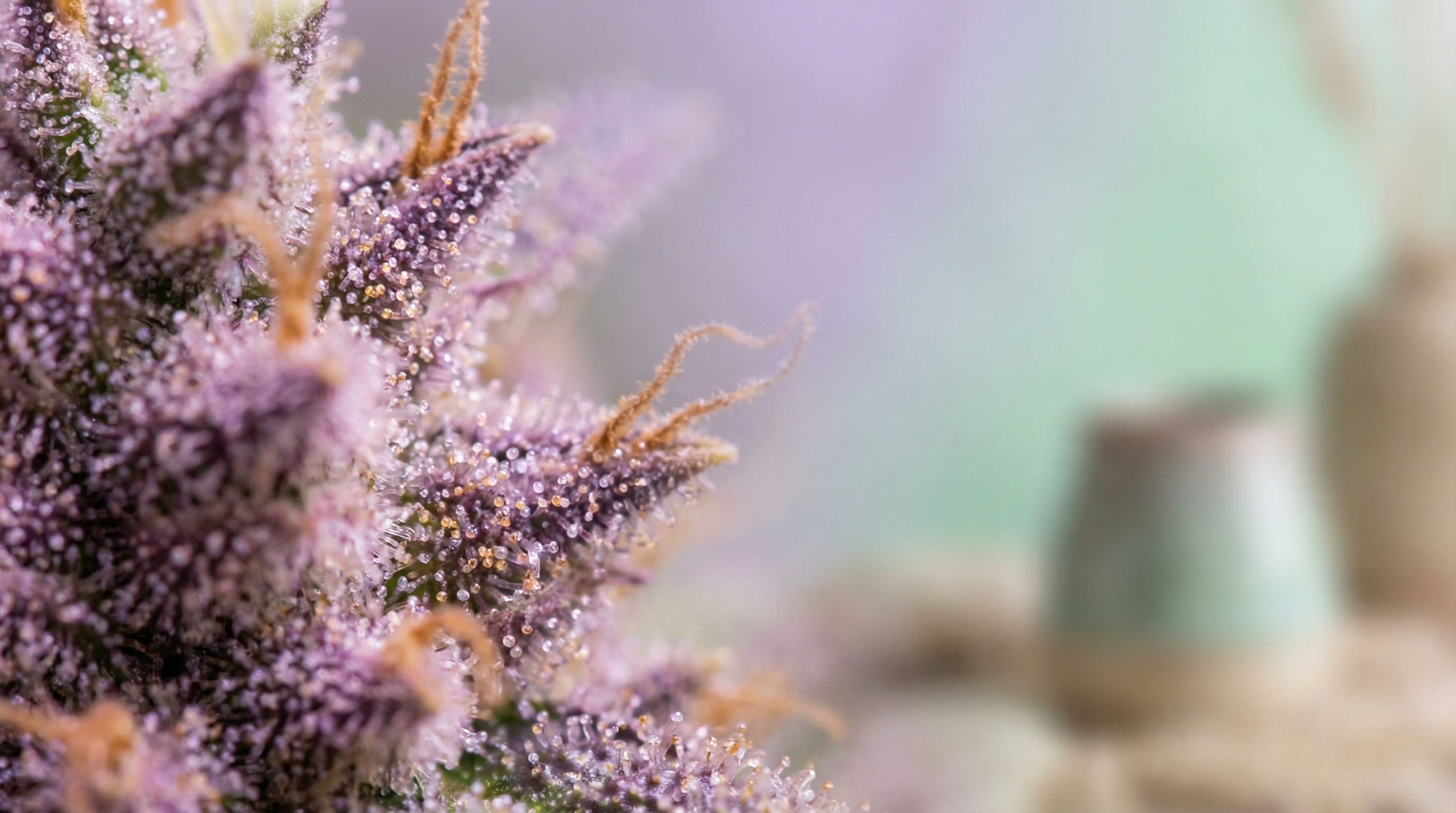
The Terpenes That Promote Sleep
Based on the research, here are the terpenes to look for:
Myrcene: The Sedation Terpene
Myrcene is the most abundant terpene in cannabis and the primary driver of that “couch-lock” feeling. A 2024 study confirmed myrcene’s sedative-hypnotic effects in insomnia models, showing it works through GABAergic pathways—the same system targeted by prescription sleep medications [Wang et al., 2024].
Look for: Strains where myrcene is the dominant terpene (>0.5% concentration)
Linalool: The Lavender Connection
Linalool gives lavender its calming scent—and it’s why lavender has been used for sleep for centuries. Research shows linalool has anxiolytic and sedative properties through GABA receptor interaction, reducing the anxiety that keeps many people awake [Guzmán-Gutiérrez et al., 2015].
Look for: Strains with floral, lavender-like aromas
Caryophyllene: When Pain Keeps You Awake
Beta-caryophyllene is unique—it’s the only terpene that directly activates CB2 receptors, giving it cannabinoid-like properties. If physical discomfort is disrupting your sleep, caryophyllene-dominant strains offer dual benefits: relaxation plus physical relief [Gertsch et al., 2008].
Look for: Strains with spicy, peppery aromas
Best Strains for Sleep: Organized by Your Needs
The Relaxing High Family: Classic Sleep Strains
The Relax High family contains strains with the terpene profiles most associated with deep sedation. These are your go-to options for straightforward sleep support.
| Strain | Dominant Terpene | Why It Helps Sleep |
|---|---|---|
| Afghan Kush | Myrcene | Pure indica landrace, heavy body sedation |
| White Widow | Myrcene | Balanced relaxation without racing thoughts |
| Blue Dream | Myrcene | Gentle onset, good for sleep anxiety |
| Alien Kush | Myrcene | Deep physical relaxation |
| Bona Dea | Myrcene | Indica with notable CBD content (12%) |
High-CBD Strains: Gentle Sleep Without Intoxication
If THC makes you anxious or you prefer minimal psychoactivity, these balanced strains leverage CBD’s anxiety-reducing effects alongside sleep-promoting terpenes:
| Strain | THC:CBD Ratio | Best For |
|---|---|---|
| CBD Lilly | 1:4 (3.75% THC, 14% CBD) | Sensitive users, anxiety-driven insomnia |
| CBD Bomb | 1:1.4 (7.5% THC, 10.5% CBD) | Moderate relief with mild psychoactivity |
| 1:1 Punchinella | 1:1 (10% each) | Balanced effects, good starting point |
| Buddha Syrup | 1:1 (10.5% each) | Myrcene-dominant, calming |
| Astral Works | ~1:1 (13% THC, 14.5% CBD) | Unique terpinolene profile |
The Relief High Family: When Pain Disrupts Sleep
If you’re tossing and turning due to physical discomfort, the Relief High family combines caryophyllene’s pain-addressing properties with sedating effects:
| Strain | Key Terpenes | Why It Helps |
|---|---|---|
| Zkittlez | Caryophyllene | Fruity flavor, full-body calm |
| Apple Fritter | Caryophyllene | Dessert-like, potent relaxation |
| Gorilla Glue | Caryophyllene | Heavy-hitting, “glued to the couch” |
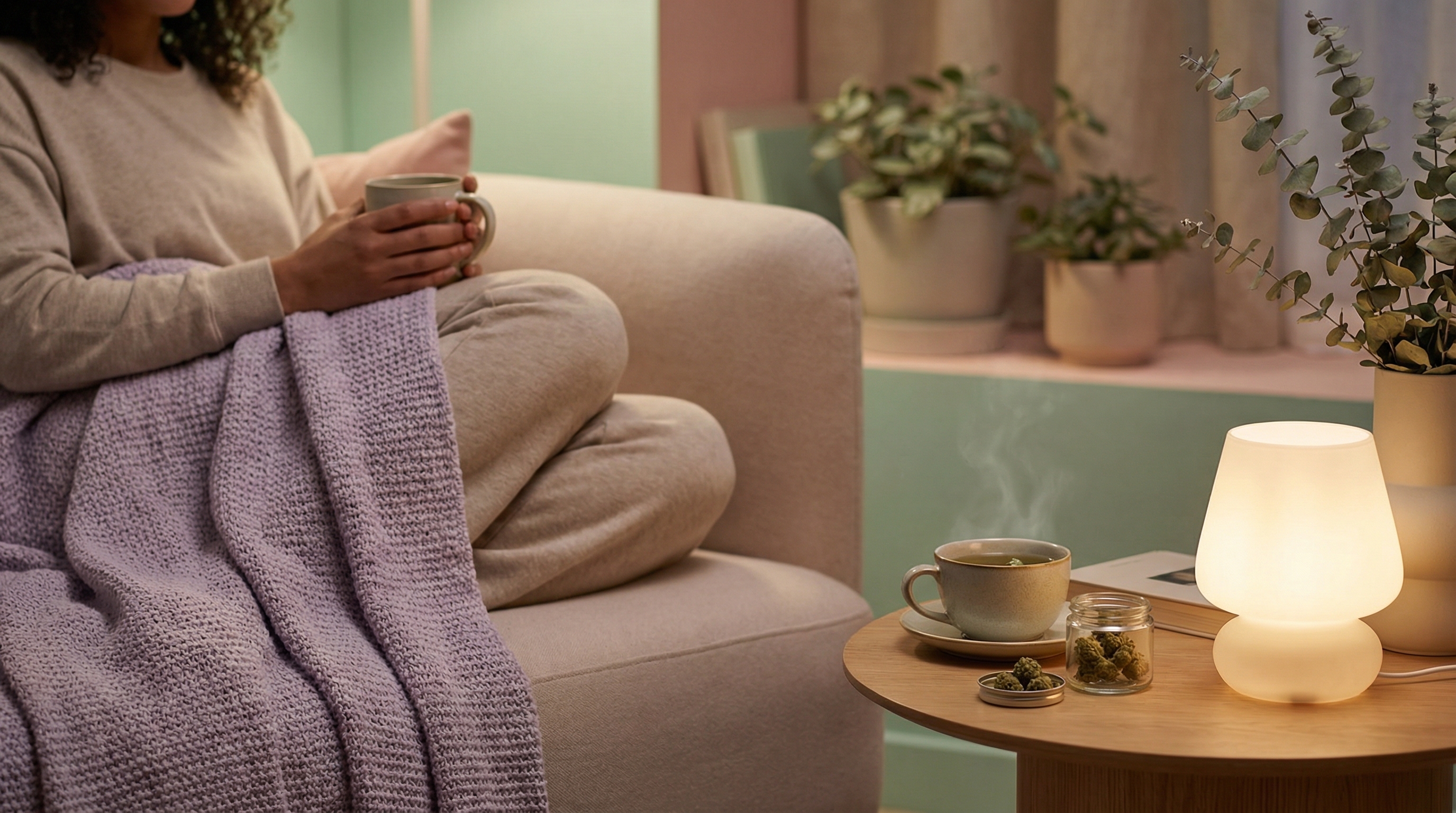
Dosing for Sleep: Less Is Often More
Here’s something counterintuitive backed by research: lower doses of THC may be more effective for sleep than higher doses. High doses can increase anxiety or lead to next-day grogginess.
Practical guidelines:
- Start low: 2.5-5mg THC for edibles, one small inhalation for flower
- Timing matters: Inhale 30-60 minutes before bed; take edibles 2-3 hours before
- Track your response: The same strain affects people differently
The Tolerance Question
Some research suggests sleep benefits may diminish with daily use. Consider:
- Using cannabis for sleep 3-4 nights per week rather than nightly
- Taking regular tolerance breaks
- Rotating between different strains
The Pattern Matters More Than the Strain
Here’s the truth that strain guides won’t tell you: how YOU respond matters more than which strain you choose.
Two people can smoke the exact same Blue Dream and have opposite experiences. One sleeps like a baby; the other lies awake with creative ideas flooding their brain. The difference isn’t the strain—it’s their individual endocannabinoid system, tolerance, and the context of consumption.
This is why tracking your experiences is the most powerful tool for finding your sleep solution. Note the strain, the dose, the timing, and how you slept. After a few weeks, patterns emerge that no strain guide could predict.
💡 Pro tip: High IQ lets you log your sessions and see which strains and terpene profiles actually work for YOUR sleep patterns. Your data beats generic recommendations every time.
Key Takeaways
- THC and CBN improve sleep; CBD alone doesn’t (per 2025 meta-analysis of 1,077 participants)
- Myrcene is the #1 sleep terpene—look for strains where it’s dominant
- CBN shows promise as a non-intoxicating sleep aid (2024 Sydney study)
- Terpenes + cannabinoids together increase time in deep and REM sleep
- Lower doses work better than higher doses for most people
- Track your response—individual variation matters more than strain labels
Frequently Asked Questions
Will cannabis help me stay asleep, or just fall asleep?
Research suggests cannabis may help with both, though evidence is stronger for reducing sleep onset time (falling asleep faster). Some people report fewer nighttime awakenings. Extended-release edibles or higher-CBD strains may provide longer-lasting effects, but individual responses vary.
Is CBD or THC better for sleep?
Based on 2024-2025 research, THC appears more effective for direct sleep promotion, while CBD may help indirectly by reducing anxiety. Many people find combinations work best. Consider starting with balanced 1:1 ratios like Buddha Syrup or CBD Bomb.
What about CBN products specifically for sleep?
The 2024 University of Sydney research suggests CBN is promising, showing sleep increases comparable to prescription sleep aids in animal studies. If you find flower that’s been properly aged/cured, it naturally contains more CBN. Dedicated CBN products are also emerging in legal markets.
Why do some “indica” strains keep me awake?
Because indica/sativa classifications don’t predict effects—terpene profiles do. A strain labeled “indica” but dominant in terpinolene or limonene (typically energizing terpenes) may not help sleep at all. Always check the terpene profile, not just the classification.
Sources
Gertsch, J., et al. (2008). “Beta-caryophyllene is a dietary cannabinoid.” Proceedings of the National Academy of Sciences, 105(26), 9099-9104. PMID: 18574142
Guzmán-Gutiérrez, S.L., et al. (2015). “Linalool and β-pinene exert their antidepressant-like activity through the monoaminergic pathway.” Life Sciences, 128, 24-29. PMID: 25771248
McGregor, I.S., et al. (2024). “A sleepy cannabis constituent: cannabinol and its active metabolite influence sleep architecture in rats.” Neuropsychopharmacology. DOI: 10.1038/s41386-024-02018-7
Moltke, J. & Hindocha, C. (2025). “Effects of a cannabidiol/terpene formulation on sleep in individuals with insomnia.” Journal of Clinical Sleep Medicine. PMID: 39167421
Suraev, A.S., et al. (2025). “Clinical Trials: Cannabis Formulations Dominant in THC and CBN, but Not CBD, Associated With Improved Sleep Quality.” Sleep Medicine Reviews. Meta-analysis of 6 RCTs, n=1,077
Wang, Y., et al. (2024). “Beta-Myrcene as a Sedative-Hypnotic Component from Lavender Essential Oil.” Phytotherapy Research. PMID: 39338324