

CBN: The Sleepy Cannabinoid — Facts vs Fiction
What does science actually say about CBN for sleep? We review every clinical trial, bust the marketing myths, and reveal a surprising melatonin connection.

Professor High
The Most Overhyped Cannabinoid in Cannabis
Walk into any dispensary or scroll through any cannabis wellness brand, and you’ll see it everywhere: CBN gummies for sleep. CBN tinctures for rest. CBN capsules that promise to be “the most sedative cannabinoid” — some marketing materials even claim it’s 10 times stronger than prescription sleeping pills.
Here’s the problem: that claim has zero clinical evidence behind it. The original source — a Steep Hill Laboratory report claiming “2.5-5mg of CBN equals a mild pharmaceutical sedative” — was retracted. Steep Hill later amended their analysis to state that “with the advent of a few small trials, sedative qualities have not been observed.”
CBN (cannabinol) has become the darling of the cannabis sleep market, projected to be a multi-billion-dollar category. But when you actually read the clinical trials — every single one — the story is far more nuanced, far more interesting, and honestly, far more useful than the marketing would have you believe.
In this deep dive, we’re going to separate what science actually knows about CBN from what brands want you to believe. Along the way, we’ll uncover a surprising twist about why your CBN products might actually be working — just not for the reason you think.
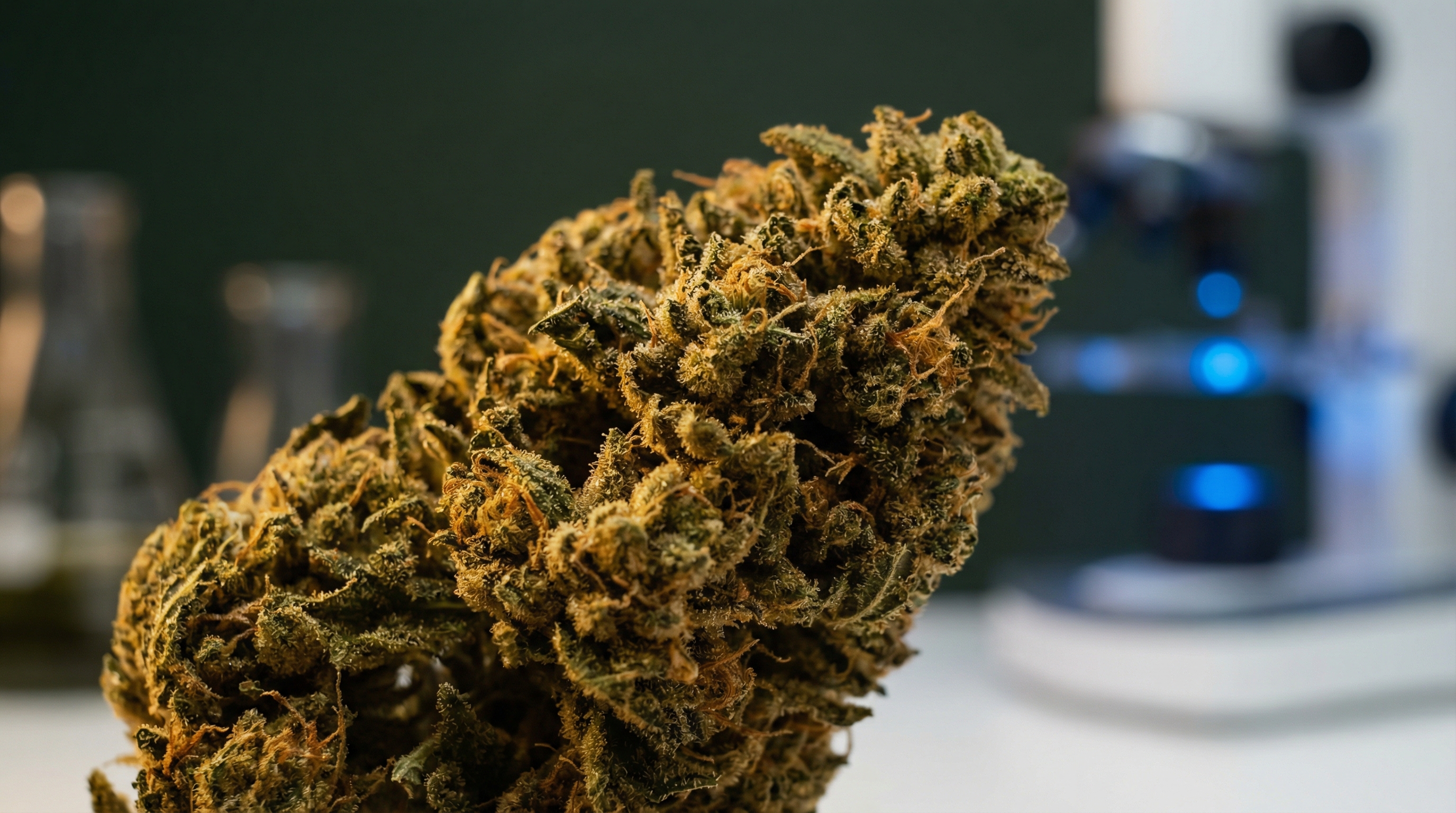
What Is CBN, Exactly?
CBN holds a unique place in cannabis history: it was the first cannabinoid ever isolated, discovered in the 1890s — decades before anyone knew THC existed. Its structure was characterized in the 1930s, making it the OG of cannabinoid science.
But CBN isn’t produced by the cannabis plant directly. It’s a degradation product of THC. When THC is exposed to heat, light, oxygen, or simply time, its molecular structure changes through a process called oxidative aromatization. The result is CBN — a compound with roughly 10% of THC’s psychoactive potency [Corroon, 2021].
The “Old Weed” Connection
This is where the sleep mythology begins. Cannabis consumers have long noticed that old, improperly stored flower seems more sedating than fresh product. Since aged cannabis contains elevated CBN levels (fresh flower typically has less than 1% CBN), people made the logical leap: CBN must be what makes old weed sleepy.
It’s a reasonable hypothesis. But as we’ll see, the actual science tells a different story — one involving disappearing terpenes, reduced THC levels, and a metabolite that nobody saw coming.
CBN’s Receptor Profile: Not What You’d Expect
To understand why CBN’s sleep effects are so debated, you need to understand how it interacts with your body.
CB1 Receptors (The “High” Receptors)
CBN is a weak partial agonist at CB1 receptors, with a binding affinity (Ki) of about 211 nM. For comparison, THC’s Ki is around 21 nM — meaning THC binds roughly 10 times more strongly [Corroon, 2021]. This is why CBN produces minimal intoxication at typical doses. You won’t feel “high” from CBN alone.
CB2 Receptors (The Immune System)
CBN shows meaningful affinity for CB2 receptors, which are concentrated in your immune system. Through CB2, CBN can inhibit specific inflammatory signaling pathways including CREB and NF-kB in activated T cells. This is where CBN’s anti-inflammatory potential lives.
The 11-OH-CBN Bombshell
In November 2024, researchers at the University of Sydney’s Lambert Initiative made a discovery that reframed everything we thought about CBN [Arnold et al., 2024].
When your body metabolizes CBN through the liver’s CYP2C9 and CYP3A4 enzymes, it produces a metabolite called 11-OH-CBN. Here’s the kicker: 11-OH-CBN acts as a partial CB1 agonist with potency and efficacy comparable to THC itself.
Let that sink in. CBN alone barely touches CB1 receptors. But once your liver processes it, the resulting metabolite has THC-level potency at the very receptors that affect sleep, pain, and mood. CBN may essentially be a prodrug — a compound that becomes active only after metabolism.
This discovery explains why CBN’s effects have a delayed onset of 3-4 hours in animal studies, and why oral CBN (which passes through the liver) appears more active than you’d expect from its weak receptor binding alone.
Professor High’s Take: This is eerily similar to how edibles work. THC becomes 11-OH-THC in your liver, which is 2-3x more potent. CBN undergoes a parallel transformation. Your liver is doing the heavy lifting.

Every Clinical Trial on CBN and Sleep — Reviewed Honestly
This is the section the marketing departments don’t want you to read. Let’s go through every relevant study, including sample sizes, statistical significance, and — critically — who funded the research.
The 1975 Karniol Study (n=5)
The most frequently cited “evidence” for CBN as a sedative comes from a 1975 study with just five male volunteers [Karniol et al., 1975].
What it actually found:
- 50mg CBN alone: “Had no effect”
- 25mg THC alone: Volunteers felt “drugged, drunk, dizzy, and drowsy”
- THC + CBN combined: More drowsiness than THC alone
The direct quote from the paper: “Subjects reported that they felt drowsy under the influence of delta-9-THC, but not under the influence of CBN.”
The most-cited evidence for CBN as a sedative actually shows CBN alone produced no drowsiness. CBN only enhanced THC’s sedating effects. This is the entourage effect in action — not CBN acting as an independent sleep aid.
The Corroon Systematic Review (2021)
Dr. Jamie Corroon from the Center for Medical Cannabis Education conducted the definitive review of CBN sleep research, screening 99 human studies [Corroon, 2021].
His conclusion was blunt:
“Published clinical trials investigating associations between CBN and validated sleep questionnaires and/or formal polysomnography were not identified in this review.”
“Individuals seeking cannabis-derived sleep aids should be skeptical of manufacturers’ claims of sleep-promoting effects.”
He also noted a critical dosing gap: clinical studies used 20-1,200mg doses, while marketed CBN products typically contain 5mg or less. That’s a 4-240x difference between what’s been studied and what’s being sold.
The Bonn-Miller Trial (2024, n=293)
This is the largest independent, placebo-controlled trial of CBN for sleep [Bonn-Miller et al., 2024].
Design: Randomized, double-blind, placebo-controlled. 293 participants aged 18-55 with poor sleep quality took either placebo, 20mg CBN, or CBN combined with various CBD doses for 7 nights.
The critical result: The primary sleep quality endpoint was not statistically significant (OR = 2.26, 95% CI [0.93, 5.52], p = 0.082). In clinical research, p = 0.082 means the result could easily be due to chance.
However, CBN did show some secondary benefits:
- Reduced nighttime awakenings (p = 0.025)
- Reduced overall sleep disturbance (p = 0.023)
- Adding CBD did NOT enhance CBN’s effects
Bottom line: Modest effects at a dose 4x higher than most consumer products, with the main endpoint failing to reach significance.
The TruCBN Trial (2024, n=1,020)
This is the largest CBN sleep trial by sample size [Kolobaric et al., 2024]. It tested three CBN doses (25mg, 50mg, 100mg) against placebo and 4mg melatonin.
Results: All CBN dose groups showed significant improvement versus placebo, with no significant differences between CBN groups and melatonin.
The catch: This study was funded by Floraworks, the manufacturer of TruCBN. Industry-funded trials are not automatically invalid, but they consistently show more favorable outcomes across all areas of pharmaceutical research. This conflict of interest deserves transparency.
The Arnold Rat Study (2024) — The Breakthrough
The University of Sydney’s preclinical study is the most rigorous sleep investigation of CBN to date [Arnold et al., 2024].
Using polysomnography (EEG brain wave monitoring — the gold standard), they found:
- CBN increased total sleep time (p = 0.013)
- CBN increased NREM sleep at magnitude comparable to zolpidem (Ambien)
- CBN increased NREM bout duration (longer uninterrupted sleep)
- CBN increased REM sleep (unlike zolpidem, which suppresses REM)
- Effects had a delayed onset of 3-4 hours (consistent with liver metabolism to 11-OH-CBN)
- Tolerance developed with 15 days of repeated dosing
This provides “the first objective evidence that CBN influences sleep architecture.” The delayed onset suggests CBN may be better suited for sleep maintenance insomnia (waking up too early) rather than sleep onset insomnia (trouble falling asleep).
Important limitation: These are rat studies. Rodent sleep architecture differs from humans, and doses don’t translate directly.
The CUPID Study (2026, n=20) — The Human Answer
The study everyone was waiting for has arrived. The CUPID trial is the first human polysomnography study of CBN in people with diagnosed insomnia, testing 30mg and 300mg CBN versus placebo [Lavender et al., 2023; results published 2026].
The primary outcome: The 300mg dose did NOT significantly reduce wake after sleep onset — the study’s main endpoint failed.
However, secondary outcomes showed some promise:
- Improved NREM stage 2 sleep duration
- Improved subjective sleep quality
- Reduced time to fall asleep (sleep onset latency)
The researchers concluded: “Secondary outcomes suggest that CBN could lead to sleep-related improvements that warrant larger and longer-term trials.”
The takeaway: Even at 300mg — a dose 60 times higher than most retail products — CBN failed its primary objective sleep measure. The secondary improvements are encouraging but far from definitive. The small sample size (n=20) also limits what we can conclude.

The Melatonin Plot Twist
Here’s the finding that changes everything about how we interpret CBN sleep products.
In 2025, researchers including the University of Sydney’s Jonathon Arnold discovered that CBN potently inhibits the liver enzyme CYP1A2 [Anderson & Arnold, 2025]. CYP1A2 is the primary enzyme responsible for breaking down melatonin in your body.
The result: when CBN is taken alongside melatonin, plasma melatonin levels increase 4-fold.
Now look at what most CBN sleep products contain: CBN + melatonin. It’s one of the most common formulations on the market.
This means the perceived sleep benefit of many CBN products may have little to do with CBN’s direct effects on sleep. Instead, CBN is acting as a melatonin potentiator — making the melatonin in the same product dramatically more effective by preventing your body from clearing it.
This isn’t necessarily bad news for consumers. If the combination works for you, the mechanism matters less than the outcome. But it does mean:
- CBN products without melatonin may not work as well as those with it
- The “CBN is a sedative” narrative is probably wrong — it’s more accurately a melatonin amplifier
- Drug interactions are a real concern. If you take other medications metabolized by CYP1A2 (caffeine, certain antidepressants, some antipsychotics), CBN could alter their levels
What CBN Can Actually Do (Beyond Sleep)
While the sleep evidence remains inconclusive, CBN has shown genuine promise in other areas — though mostly in preclinical research.
Antibacterial Activity (Including MRSA)
In 2008, researchers found that CBN showed potent activity against methicillin-resistant Staphylococcus aureus (MRSA) — the antibiotic-resistant “superbug” that kills thousands annually [Appendino et al., 2008]. CBN demonstrated minimum inhibitory concentrations (MIC) in the low microgram/mL range, making it a candidate for topical antibacterial applications.
Anti-Inflammatory Properties
A 2024 study found CBN modulates TRPV1 channels in human skin cells, reducing pro-inflammatory markers (IL-8, IL-12, IL-31) while increasing anti-inflammatory IL-10 [Di Meo et al., 2024]. This suggests potential for inflammatory skin conditions — more evidence-backed than the sleep claims.
Neuroprotection
Multiple preclinical studies show CBN has potent antioxidant activity and may protect brain cells:
- Prevented cell death at just 100 nanomolar concentrations in Alzheimer’s disease models
- Delayed motor abnormalities in ALS mouse models at 5 mg/kg/day
- A 2025 Salk Institute study found CBN improved synaptic and mitochondrial health in aging mice, with effects more pronounced in females
Pain Modulation
The 2025 metabolite studies showed both CBN and 11-OH-CBN elevate intracellular calcium in dorsal root ganglia sensory neurons [Kundu et al., 2025] — the cells that transmit pain signals. Combined with CBN’s anti-inflammatory properties and indirect endocannabinoid system modulation, pain management may be a more evidence-supported application than sleep.
The Honest Consumer’s Guide to CBN
Given what the science actually shows, here’s how to think about CBN products:
If You Want CBN for Sleep
- Manage expectations. The evidence is mixed, not definitive. The largest independent trial’s primary endpoint failed.
- Look for combination formulations. CBN appears more effective with THC (entourage effect) and may amplify melatonin. CBN alone at 5mg is unlikely to be sufficient based on clinical dosing data.
- Give it 3-4 hours. CBN’s effects are delayed due to liver metabolism. Taking it right before bed may miss the window. Consider dosing earlier in the evening.
- Watch for tolerance. The rat study showed tolerance developing within 15 days. If CBN seems to lose effectiveness, a tolerance break may help — though human tolerance patterns have not yet been studied.
- Don’t abandon what works. Terpenes like myrcene and linalool have their own sedative evidence. A high-myrcene strain before bed may be more effective than a 5mg CBN gummy.
What to Look For on Labels
- Dose: Look for at least 20mg CBN if you want doses in the range that showed any clinical effect
- Third-party testing: The unregulated market means quality varies wildly. Verify actual CBN content
- Other ingredients: Note whether melatonin, THC, CBD, or terpenes are included — these may be driving the effects more than CBN
- Don’t pay a premium for “CBN-rich” flower. It just means the cannabis is old and the THC has degraded
If You’re Interested in CBN for Other Reasons
The anti-inflammatory and neuroprotective evidence, while preclinical, is arguably stronger than the sleep evidence. If you’re exploring cannabinoids for inflammation, skin health, or general wellness, CBN is worth watching — but wait for human clinical trials before expecting specific therapeutic outcomes.
Why the Old Weed Myth Persists
The “aged cannabis is more sedating because of CBN” hypothesis has several problems:
- The 1975 Karniol study directly contradicts it: Subjects felt drowsy on THC alone, not CBN alone
- Terpene evaporation: As cannabis ages, lighter stimulating terpenes like limonene and pinene evaporate first, while heavier sedating terpenes like myrcene become proportionally dominant. As Dr. Ethan Russo (International Cannabis and Cannabinoids Institute) explains: “CBN hasn’t been shown to be sedative on its own” — the drowsiness of aged cannabis comes from these terpene profile shifts, not CBN
- Reduced THC: Old cannabis has less total THC. Lower THC doses produce different, sometimes more sedating, subjective effects than high doses
- Confirmation bias: If you expect old weed to be sleepy (because the internet told you so), you’re more likely to perceive it that way
The sedation from old cannabis is likely a combination of terpene profile shifts, reduced THC, and possibly some CBN contribution — not CBN acting as a powerful sedative on its own.
The Bottom Line
Is CBN “the sleepy cannabinoid”? The honest answer is: we don’t know yet.
What we do know:
- CBN alone showed no drowsiness in the earliest human studies
- The largest independent clinical trial failed its primary sleep endpoint
- CBN’s liver metabolite (11-OH-CBN) has THC-comparable potency, suggesting delayed and potentially meaningful effects at sufficient doses
- CBN quadruples melatonin levels by inhibiting CYP1A2, meaning many CBN+melatonin products work by boosting melatonin
- CBN combined with THC appears more effective than CBN alone (entourage effect)
- The first human polysomnography trial (CUPID) failed its primary endpoint at 300mg, though secondary measures improved
- Most consumer products contain 5mg — far below the 20-100mg doses used in clinical trials
CBN’s story is a perfect example of why Professor High exists: the cannabis industry often races ahead of the science, leaving consumers to navigate marketing claims without context. The truth about CBN is more interesting than the hype — it involves liver metabolism, enzyme inhibition, and the entourage effect. It’s just not as simple as “eat this gummy, fall asleep.”
The real lesson? Track what actually works for you. Whether it’s CBN, myrcene-rich flower, a linalool-dominant strain, or a simple wind-down routine — your body’s response is what matters, not the marketing on the label.
Key Takeaways
- CBN is not a proven sedative. The largest independent trial failed its primary sleep endpoint. Marketing claims far outpace clinical evidence.
- The 11-OH-CBN metabolite is the real story. CBN’s liver metabolite has THC-comparable potency, explaining delayed effects and the need for oral dosing.
- CBN quadruples melatonin levels. Many CBN+melatonin products may work primarily by boosting melatonin through CYP1A2 inhibition.
- CBN + THC works better than CBN alone. The entourage effect applies — combination formulations show more consistent results.
- Most products are underdosed. Consumer products contain 5mg; clinical evidence starts at 20-100mg.
- The CUPID polysomnography trial failed its primary endpoint. Even at 300mg, CBN did not significantly reduce nighttime wakefulness — though secondary measures showed some promise.
- CBN’s strongest evidence is outside sleep. Antibacterial (MRSA), anti-inflammatory, and neuroprotective properties have more consistent preclinical support.
Frequently Asked Questions
Is CBN legal?
CBN is federally unscheduled in the United States, making it legal at the federal level. However, state laws vary. Oregon’s OLCC issued compliance guidance on artificially derived CBN products in November 2024, signaling increasing regulatory attention.
Can CBN get you high?
At typical product doses (5-25mg), CBN produces minimal psychoactive effects — roughly 10% of THC’s potency. However, its metabolite 11-OH-CBN has THC-comparable CB1 activity, so higher doses or individual metabolic differences could produce noticeable effects.
How long does CBN take to work?
Based on preclinical data, CBN’s sleep effects have a delayed onset of 3-4 hours due to liver metabolism to 11-OH-CBN. Interestingly, the 2026 CUPID human trial found CBN may reduce sleep onset latency (time to fall asleep), suggesting some effects may appear sooner. Still, this is much slower than melatonin (30-60 minutes) or THC (minutes when smoked). Plan accordingly.
Should I combine CBN with THC?
The limited evidence suggests CBN is more effective for sleep when combined with THC than when used alone. The 1975 Karniol study and the 2025 Hausenblas study both support this. If you have legal access to THC, a combination may be more effective than CBN isolate.
What about CBN for pain instead of sleep?
Emerging research on CBN’s metabolites and their interaction with sensory neurons suggests pain modulation may be a legitimate application. Combined with CBN’s anti-inflammatory properties via TRPV1 and CB2 receptors, this area deserves attention as clinical trials progress.
Sources
Arnold, J.C., et al. (2024). “A sleepy cannabis constituent: cannabinol and its active metabolite influence sleep architecture in rats.” Neuropsychopharmacology. DOI: 10.1038/s41386-024-02018-7
Anderson, L.L., Arnold, J.C., et al. (2025). “Drug-drug interaction between cannabinol and melatonin.” Basic & Clinical Pharmacology & Toxicology. PMID: 39722474
Appendino, G., et al. (2008). “Antibacterial cannabinoids from Cannabis sativa: a structure-activity study.” Journal of Natural Products, 71(8):1427-1430. PMID: 18681481
Bonn-Miller, M.O., et al. (2024). “Double-blind, randomized, placebo-controlled study of cannabinol with and without cannabidiol on sleep quality.” Experimental and Clinical Psychopharmacology. PMID: 37796540
Corroon, J. (2021). “Cannabinol and Sleep: Separating Fact from Fiction.” Cannabis and Cannabinoid Research, 6(5):366-371. PMC8612407
Di Meo, C., et al. (2024). “CBN TRPV1-mediated anti-inflammatory properties in human keratinocytes.” Biofactors, 51(1):e2122. PMID: 39275884
Hausenblas, H., et al. (2025). “Effects of a cannabinoid supplement on sleep quality and mood.” Health Science Reports. PMC11839740
Karniol, I.G., et al. (1975). “Effects of delta-9-THC and cannabinol in man.” Pharmacology, 13(6):502-512. PMID: 1221432
Kolobaric, A., et al. (2024). “A randomized, double-blind, placebo-controlled trial of cannabinol for sleep quality.” Pharmaceuticals (Basel). PMID: 39204082
Kundu, D., et al. (2025). “Cannabinol CYP450 metabolites: cannabinoid receptor and sensory neuron interactions.” PMID: 40568800
Lavender, I., et al. (2023). “CUPID study protocol: Cannabinol for insomnia disorder.” BMJ Open, 13(8):e071148. PMID: 37612115
Lavender, I., et al. (2026). “CUPID trial results: Cannabinol for insomnia.” Journal of Sleep Research. DOI: 10.1111/jsr.70124
Salk Institute. (2025). “CBN alleviates age-related cognitive decline by improving synaptic and mitochondrial health.” Redox Biology.