

The Science Behind High Families: How a German Study Changed Cannabis Classification
A 2025 German study of 140 strains proved sativa/indica labels are scientifically meaningless. See how it inspired our High Families system.

Professor High
Your friendly cannabis educator, bringing science-backed knowledge to the community.
Here’s something that might surprise you: the sativa and indica labels on your cannabis products are scientifically meaningless.
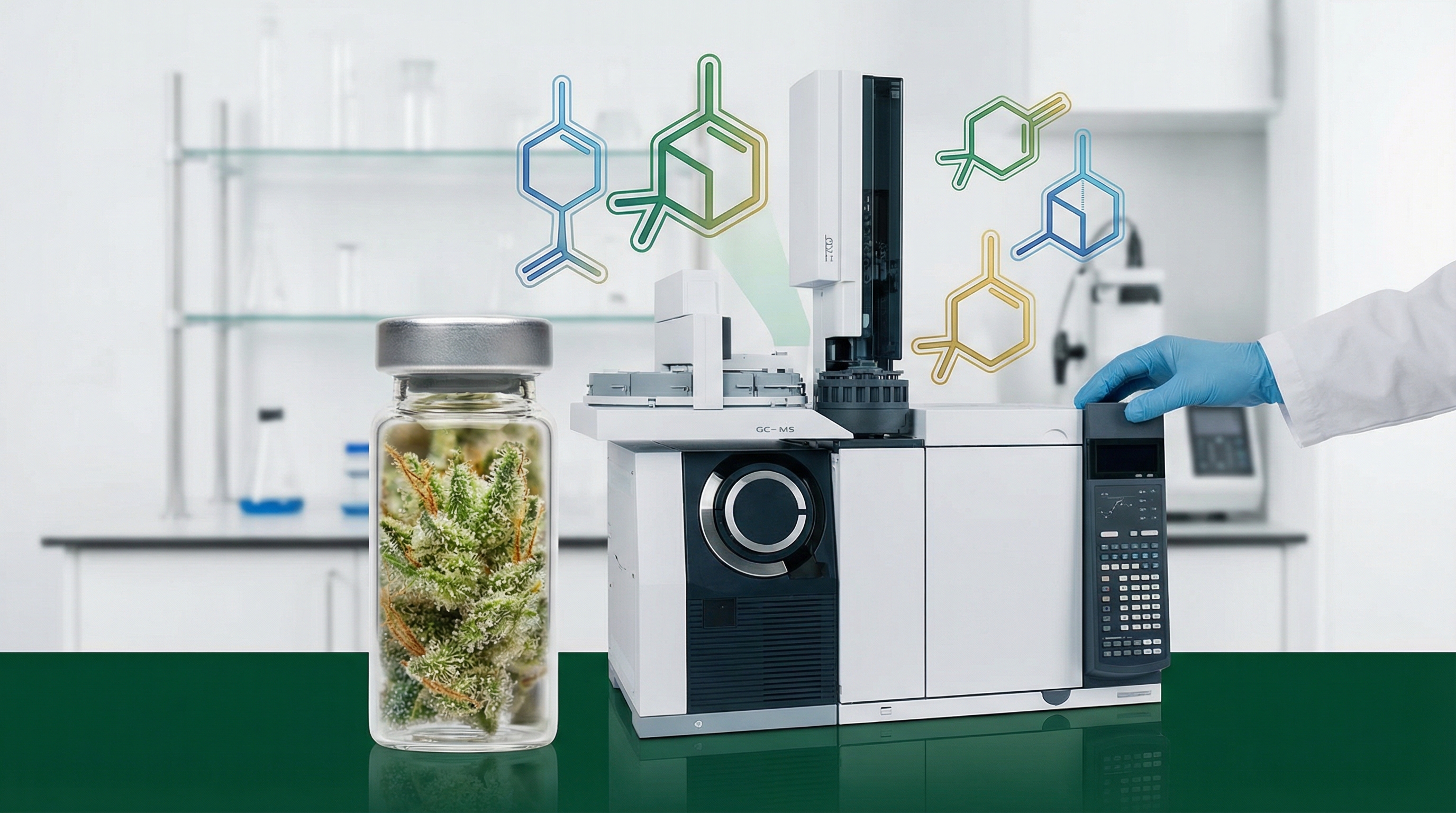
That’s not an opinion—it’s the conclusion of a groundbreaking 2025 German study that analyzed 140 medicinal cannabis strains using gas chromatography-mass spectrometry (GC-MS). The researchers at Schurer Pharma found no statistical correlation between terpene profiles and sativa/indica genetics (p > 0.05). We’ve written extensively about why the indica vs. sativa myth persists—but this study provides the most rigorous debunking yet.
This research didn’t just debunk an industry myth. It provided the scientific foundation for a better way to classify cannabis—one based on actual chemistry, not marketing labels. And it’s exactly why we built the High Families classification system.
🧬 The Study That Changed Everything
What the Researchers Did
Dr. Nadine Herwig and her team at Schurer Pharma in Leipzig, Germany conducted one of the most comprehensive analyses of medicinal cannabis terpene profiles ever published. Here’s what made their approach rigorous:
| Methodology | Details |
|---|---|
| Sample Size | 140 medicinal cannabis flowers |
| Analysis Method | GC-MS (Gas Chromatography-Mass Spectrometry) |
| Terpenes Detected | 38 different compounds |
| Statistical Tools | K-Means clustering, t-SNE visualization, ANOVA |
| Market | German medicinal cannabis (legally regulated) |
The researchers weren’t testing basement grows or unverified dispensary products. They analyzed pharmaceutical-grade cannabis flowers available in Germany’s regulated medical market—the same quality standards that should inform consumer choices everywhere.
The Damning Verdict on Sativa vs. Indica
The study’s findings were unambiguous:
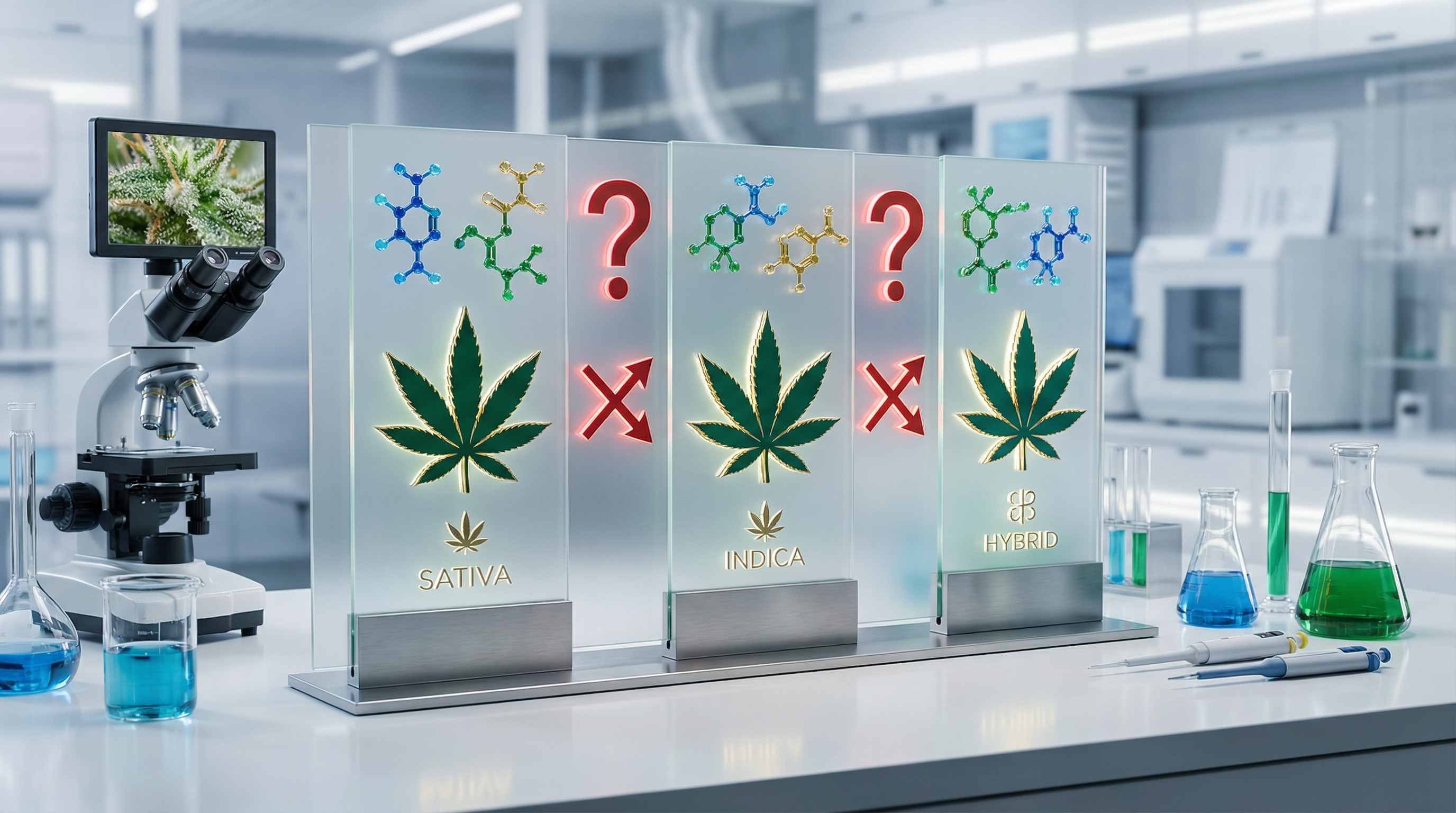
“Analysis of variance (ANOVA) demonstrated that there was no correlation between terpene profiles and genetics (p > 0.05).”
In plain English: Whether a plant is labeled sativa, indica, or hybrid tells you nothing about what terpenes it contains or how it might affect you.
The researchers examined 64 hybrids, 47 indica strains, and 29 sativa strains. When they compared terpene content across these categories, the results were “quite heterogeneous”—scientist-speak for “completely random.”
🧪 The 9 Terpenes That Actually Matter
Here’s where it gets useful. The German researchers discovered that just 9 terpenes explain 86% of the variation in cannabis chemical profiles:
| Terpene | Primary Aroma | Known Effects |
|---|---|---|
| β-Myrcene | Earthy, musky | Sedating, anti-inflammatory |
| β-Caryophyllene | Spicy, peppery | Pain relief, CB2 activation |
| Limonene | Citrus, lemon | Mood elevation, anxiety relief |
| Linalool | Floral, lavender | Calming, anti-anxiety |
| α-Humulene | Hoppy, woody | Anti-inflammatory, appetite suppression |
| α-Pinene | Pine, fresh | Alertness, memory retention |
| β-Pinene | Pine, herbal | Respiratory benefits |
| Terpinolene | Herbal, floral | Uplifting, antioxidant (rare) |
| Fenchol | Camphor, mint | Antibacterial properties |
This means that when you’re shopping for cannabis, these 9 compounds tell you more about your experience than any marketing label ever could.
The study also found interesting correlations between certain terpenes:
- β-caryophyllene and α-humulene have a 0.97 correlation (they almost always appear together)
- α-pinene and β-pinene correlate at 0.82
- Limonene and camphene show 0.82 correlation
- THC content and total terpenes have a moderate 0.41 correlation

📊 Six Clusters, Not Three Labels
Using K-Means clustering analysis, the researchers identified 6 distinct chemical profiles (chemovars) that cannabis strains naturally group into. This wasn’t arbitrary—they validated the optimal cluster count using silhouette analysis, a statistical method that measures how well each strain fits its assigned group.
Here are the 6 clusters they discovered:
Cluster 1: High Myrcene + CBD
- Dominant terpene: β-Myrcene (5.43 mg/g)
- Notable: Higher CBD content (2.84%)
- Profile: Sedating, anti-inflammatory
- Strains: 24 of 140 tested
Cluster 2: Limonene-Linalool
- Dominant terpenes: Limonene (4.99 mg/g), Linalool (2.50 mg/g)
- Profile: Mood elevation, calming
- Strains: 23 of 140 tested
Cluster 3: Rare Terpinolene-Ocimene
- Dominant terpenes: Terpinolene (4.13 mg/g), Ocimene (4.05 mg/g)
- Profile: Energizing, uplifting (uncommon)
- Strains: Only 6 of 140 tested (rare!)
Cluster 4: Caryophyllene-Humulene
- Dominant terpenes: β-Caryophyllene (3.63 mg/g), α-Humulene (1.45 mg/g)
- Profile: Pain relief, CB2 receptor activation
- Strains: 35 of 140 tested (most common)
Cluster 5: Low Terpene + Mild CBD
- Total terpenes: 7.61 mg/g (lowest)
- Notable: Mild CBD presence (1.06%)
- Profile: Gentle, beginner-friendly
- Strains: 25 of 140 tested
Cluster 6: Full Spectrum
- Dominant: Myrcene + Limonene + Caryophyllene combined
- Total terpenes: 18.15 mg/g (high)
- Profile: Complex entourage effect
- Strains: 27 of 140 tested

🌿 How High Families Builds on This Science
When we read this research, we knew the cannabis community deserved better than outdated sativa/indica labels. That’s why we created the High Families classification—a system inspired by the German study’s findings but designed for real-world use.
Here’s how our 6 High Families map to the study’s clusters:
| High Family | Study Cluster | Dominant Chemistry | Experience |
|---|---|---|---|
| Uplifting High | Cluster 2 | Limonene, Linalool | Elevated mood, social energy |
| Energetic High | Cluster 3 | Terpinolene, Ocimene | Focused creativity, motivation |
| Relaxing High | Cluster 1 | Myrcene, CBD | Deep relaxation, sleep support |
| Balancing High | Cluster 5 | Low overall, mild CBD | Gentle, beginner-friendly |
| Relieving High | Cluster 4 | Caryophyllene, Humulene | Physical comfort, pain relief |
| Entourage High | Cluster 6 | Multi-terpene complex | Full-spectrum, potent |
Why This Matters for You
Instead of guessing based on “sativa = energy, indica = sleep” (which the science shows is wrong), you can now:
- Identify your preferred High Family based on the experience you want
- Look at terpene profiles on lab-tested products
- Find strains that match your chemistry preferences, not marketing labels
For example, if you’ve enjoyed strains high in limonene before, you’ll likely enjoy other Uplifting High strains—regardless of whether they’re labeled sativa, indica, or hybrid.

🔬 The Entourage Effect: Why Terpenes Matter
The German researchers emphasized something crucial: cannabis is more than just THC and CBD. They found a moderate correlation (r = 0.41) between THC content and total terpene levels, suggesting that high-quality, potent cannabis tends to have richer terpene profiles.
This connects to the entourage effect—the theory that cannabinoids and terpenes work synergistically to produce effects greater than any single compound alone. We’ve written a deep dive into how the entourage effect works if you want to explore this further.
The study cites research showing:
- Limonene may reduce THC-induced anxiety (Spindle et al., 2024)
- β-Caryophyllene activates CB2 receptors (the only terpene known to do this)
- Terpenes have independent pharmacological effects beyond cannabinoid modulation
As the researchers put it:
“Due to the entourage effect and the interactions between cannabinoids and terpenes, this group of substances is also given the necessary consideration when selecting the right medicine for the individual.”
📚 What This Means for the Future
The German study concludes with a call to action for the cannabis industry:
“The categorization of cannabis strains based on their terpene profiles allows a clearer, finer, and more meaningful classification than the existing sativa/indica classification.”
This isn’t just academic theory. It’s a roadmap for:
- Dispensaries to organize products by effect profile, not genetic lineage
- Consumers to make informed choices based on chemistry
- Researchers to correlate specific terpene ratios with therapeutic outcomes
- Cultivators to breed for consistent chemical profiles, not arbitrary labels
We’re proud to be part of this shift. The High Families system takes peer-reviewed science and makes it accessible—so you can find your ideal cannabis experience without relying on outdated myths.
🎯 Key Takeaways
- Sativa/indica labels are scientifically meaningless for predicting effects (p > 0.05)
- 9 terpenes explain 86% of cannabis chemical variation
- 6 distinct clusters naturally emerge from terpene analysis
- High Families maps to these clusters for practical strain selection
- Terpene profiles matter more than genetic classification for your experience
📖 Explore the High Families
Ready to find your family? Explore each one:
- Uplifting High — Mood elevation & social energy
- Energetic High — Focus & creative motivation
- Relaxing High — Deep relaxation & sleep
- Balancing High — Gentle & beginner-friendly
- Relieving High — Physical comfort & wellness
- Entourage High — Full-spectrum complexity
📚 Continue Learning
Want to dive deeper into cannabis science? Check out these related articles:
- The Indica vs. Sativa Myth — Why these labels don’t predict your experience
- The Entourage Effect Explained — How terpenes and cannabinoids work together
- Cannabis Science Guide 2025 — The latest research on how cannabis works
- Explore All Terpenes — Learn about each terpene’s unique effects
Sources
Herwig N, Utgenannt S, Nickl F, Möbius P, Nowak L, Schulz O, Fischer M. Classification of Cannabis Strains Based on their Chemical Fingerprint—A Broad Analysis of Chemovars in the German Market. Cannabis and Cannabinoid Research 2025;10(3):409-419. DOI: 10.1089/can.2024.0127 | PubMed
Spindle TR, Zamarripa CA, Russo E, et al. Vaporized D-limonene selectively mitigates the acute anxiogenic effects of Δ9-tetrahydrocannabinol in adults who intermittently use cannabis. Drug and Alcohol Dependence 2024;257:111267.
Russo EB. Taming THC: Potential cannabis synergy and phytocannabinoid-terpenoid entourage effects. British Journal of Pharmacology 2011;163(7):1344-1364.
Fischedick JT. Identification of terpenoid chemotypes among high THC-producing Cannabis sativa L. cultivars. Cannabis and Cannabinoid Research 2017;2(1):34-47.