

Hot vs Cold Bong Water: The Science of Water Temperature for Smoother Hits
Should you use hot or cold water in your bong? We break down the physics, filtration science, and when each temperature works best.

Professor High
Your friendly cannabis educator, bringing science-backed knowledge to the community.
The great bong water debate has split stoner circles for decades: ice-cold water for massive rips, or warm water for silky-smooth hits? Here’s the thing—both camps are right, but for completely different reasons. And the “best” choice depends on your environment, your lungs, and what kind of experience you’re after.
I’m going to break down the actual physics of what happens when smoke meets water at different temperatures, explain why your friend who swears by ice is onto something (and what they’re missing), and give you a framework for deciding based on where you live and how your lungs behave.
🧊 The Cold Water Camp
The ice-bong crew has been around since someone first dropped a few cubes in their water chamber. The appeal is obvious: cooler smoke feels less harsh on the inhale. But there’s more happening under the surface.
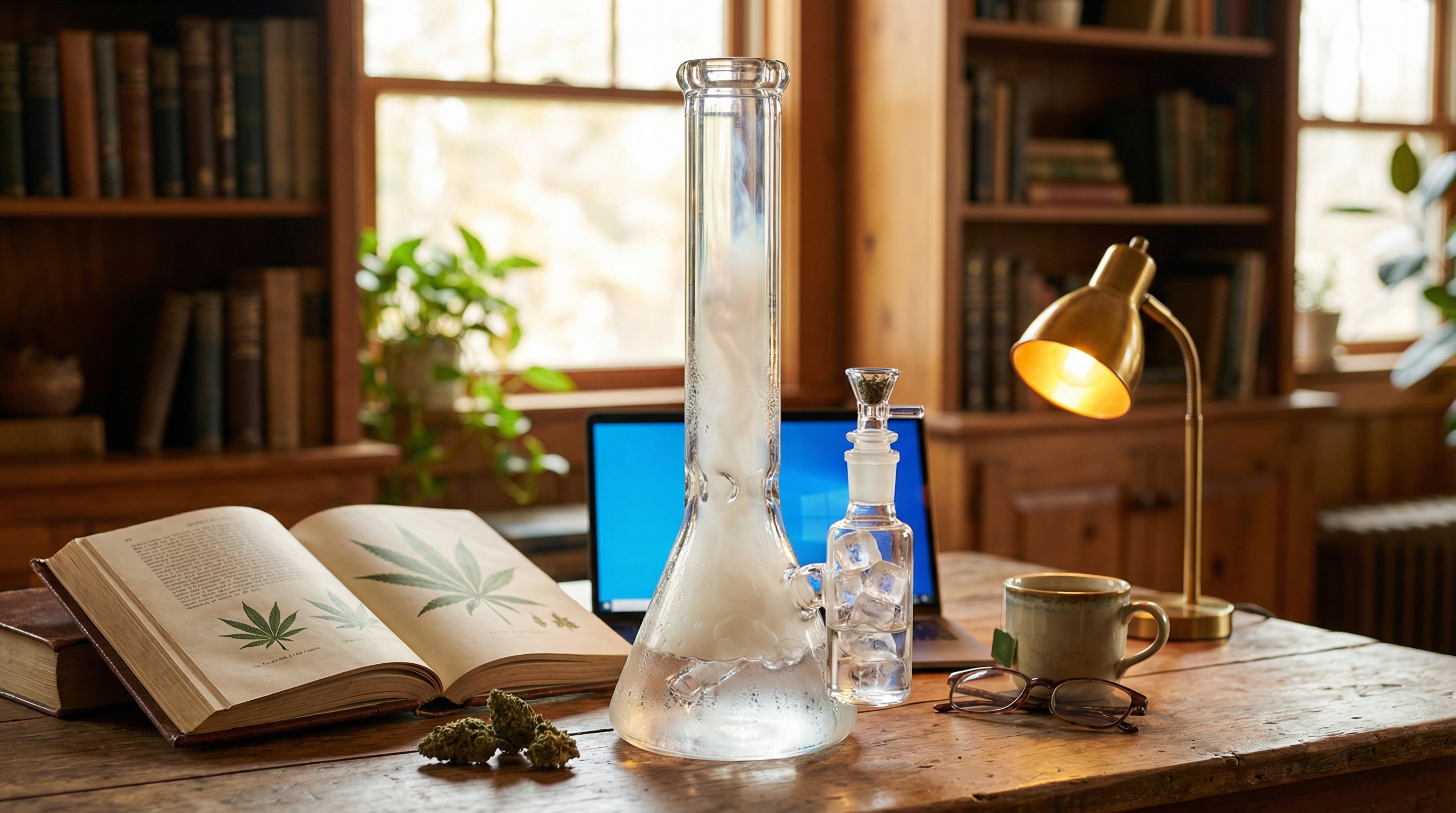
How Cold Water Works
When hot smoke (around 500-700°F from combustion) hits cold water, temperature drops fast. This rapid cooling creates that thick, milky smoke you see billowing in the chamber. The cold water acts as a heat sink, pulling thermal energy out of the smoke before it reaches your throat and lungs.
Water’s high specific heat capacity means it absorbs significant heat without its own temperature changing much—that’s why you can take multiple hits without the water warming up noticeably.
The Pros
Cooler smoke, less throat burn. The primary benefit is straightforward: cold water produces cooler smoke. If you’ve ever coughed from the heat rather than the harshness of the smoke itself, cold water solves that problem.
Thicker, denser hits. The rapid temperature change creates thicker vapor with that characteristic “snap” at the end of a pull. Many users report the hits feel more substantial.
Potential flavor preservation. Some argue that cold temperatures better preserve terpenes in the smoke, keeping flavor notes intact. The science here is less conclusive, but the anecdotal reports are strong.
The Cons
Resin buildup accelerates. THC and other cannabinoids solidify faster in lower temperatures. This means more of those compounds stick to the glass as resin rather than reaching your lungs. If you hate cleaning your piece, cold water works against you.
Throat and lung constriction. Cold air constricts airways. While the cooler smoke feels smoother initially, some users find it harder to take deep, full hits because the cold constricts their throat and bronchial passages.
Thermal shock risk. Rapidly alternating between hot smoke from the bowl and ice-cold water can stress non-borosilicate glass. It won’t shatter immediately, but over time, it can create hairline fractures.
🔥 The Warm Water Camp
The warm-water contingent is smaller but growing, especially among those who’ve tried it and felt the difference. The experience is notably different from cold water—less about massive rips and more about comfortable, extended sessions.
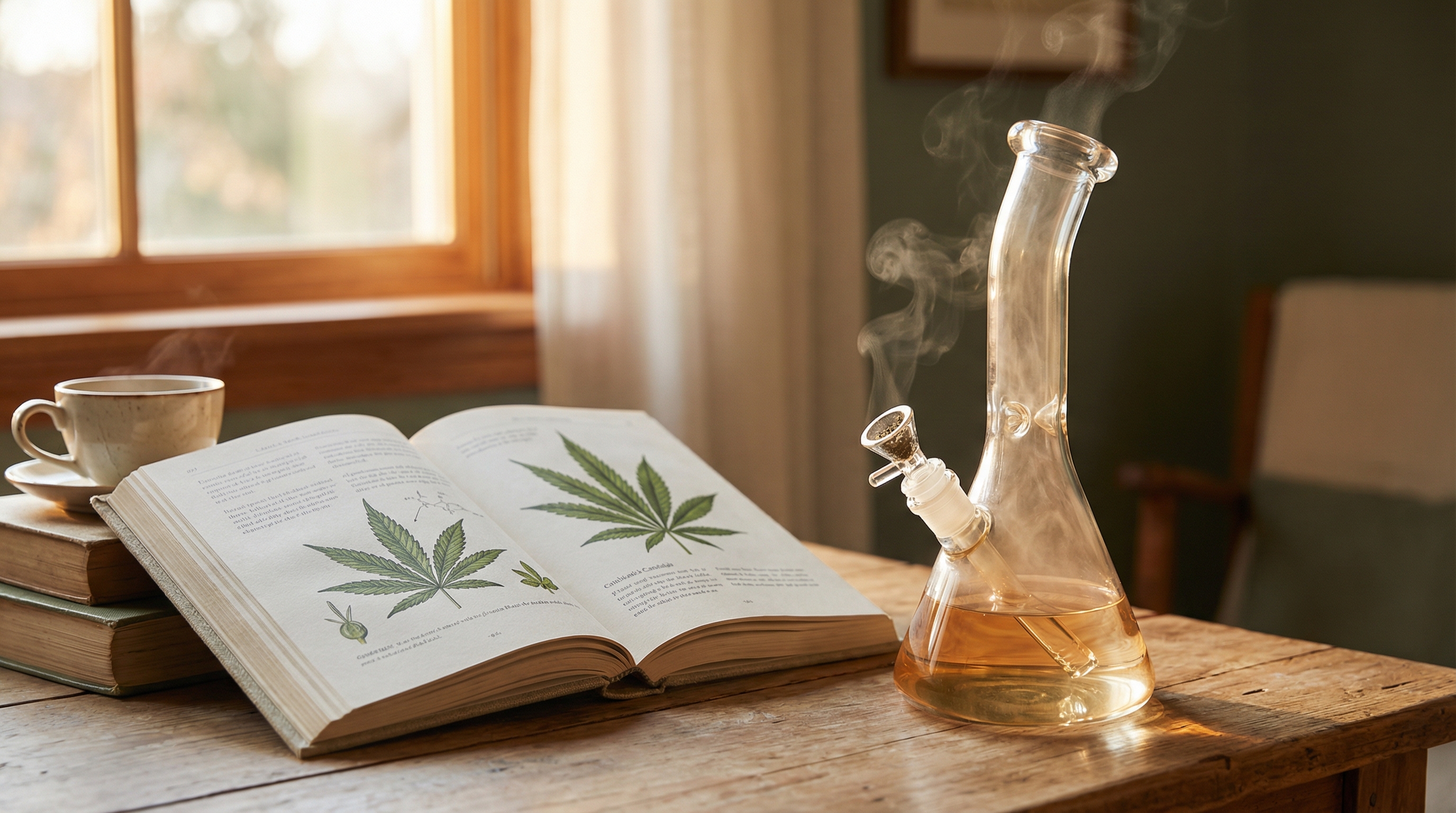
How Warm Water Works
Warm water produces steam—and steam is where the magic happens. When you inhale through warm water, you’re not just filtering smoke through liquid. You’re also inhaling warm, moist air that opens up your airways rather than constricting them.
There’s also a physics principle at play: warmer water is less viscous. Lower viscosity means the water moves more freely, producing more bubbles—and crucially, smaller bubbles. Smaller bubbles have more surface area relative to their volume, which means more contact between smoke and water.
The Pros
Smoother hits with less coughing. The steam adds moisture to the smoke, reducing the dry harshness that triggers coughing. This is the same principle behind using a humidifier when you have a cold—moist air irritates airways less than dry air.
Better for respiratory conditions. If you have asthma, chronic bronchitis, or even just sensitive lungs, warm water is generally easier on your system. Research on steam inhalation shows it can help loosen mucus, reduce inflammation, and soothe irritated airways.
Less resin loss. Warm temperatures keep resin fluid rather than letting it solidify on the glass. More of the active compounds make it through to your lungs instead of coating the inside of your bong.
More bubbles, more filtration contact. The physics of bubble formation means warm water creates smaller, more numerous bubbles. This increases the total surface area where smoke contacts water, potentially improving filtration efficiency.
The Cons
Less dense smoke. The hits won’t be as thick and milky. If you’re chasing those massive clouds, warm water won’t deliver the same visual effect.
Burn risk. This should be obvious, but it bears stating: don’t use water that’s too hot. We’re talking comfortably drinkable temperature, not boiling. More on safe temperatures below.
Different flavor profile. Some users report warm water hits taste different—less sharp, more muted. Whether this is better or worse is purely preference.
🔬 The Science: What Actually Happens
Let’s get into the physics and chemistry that actually matter. Some of what you’ve heard about bong water temperature is real science. Some of it is stoner mythology.
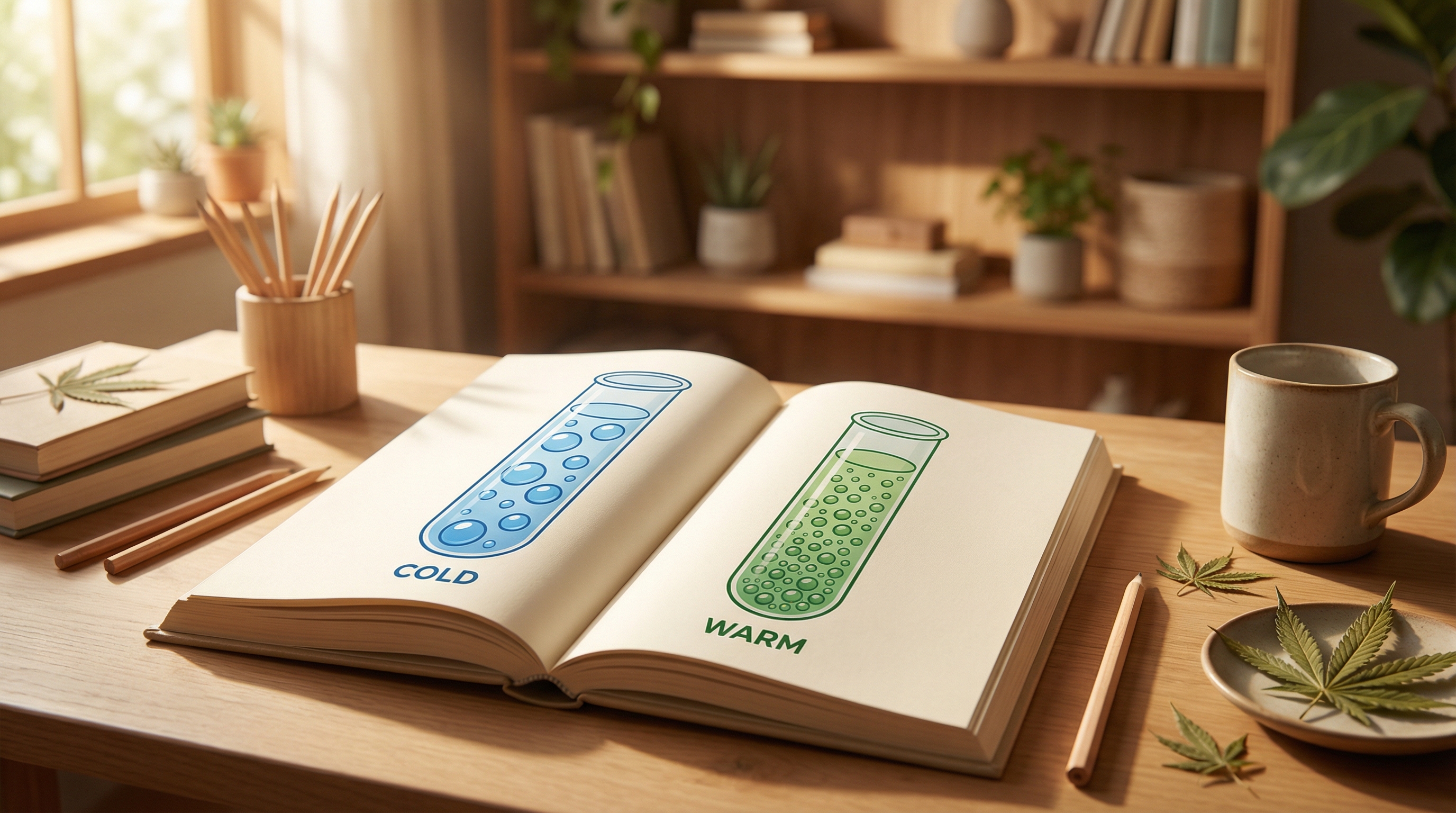
Bubble Physics: Size Matters
Here’s real science: warm water produces smaller bubbles than cold water. This happens because warm water has lower viscosity and surface tension, allowing it to break into smaller bubbles more easily.
Why does this matter? Surface area. A given volume of smoke distributed across many small bubbles contacts more water than the same volume in a few large bubbles. More water contact theoretically means more opportunity for water-soluble compounds (like some toxins) to be filtered out.
However—and this is important—research from Dale Gieringer at NORML found that water filtration’s actual effectiveness at removing harmful compounds is modest. Bongs filter some ash and tar, but many combustion byproducts pass through regardless of bubble size.
THC and Water: Near-Zero Solubility
Here’s the good news: you’re not losing significant THC to your bong water, regardless of temperature.
Cannabinoids like THC and CBD are hydrophobic—they don’t dissolve in water. This is basic chemistry. A.J. Fabrizio, research director at Terra Tech, explained to Leafly that “any loss through water filtration is negligible” because cannabinoids have near-zero water solubility.
The resin you see building up on your glass isn’t THC dissolving into water—it’s THC condensing out of the smoke and sticking to the glass surface. Cold water accelerates this condensation because lower temperatures cause the compounds to solidify faster. But the water itself isn’t absorbing your cannabinoids.
What Water Actually Filters
According to research summarized by Leafly, water filtration removes:
- Ash and particulate matter (effectively)
- Some tar and polycyclic aromatic hydrocarbons (partially)
- Water-soluble toxins (partially)
Water filtration does NOT effectively remove:
- Carbon monoxide
- Most volatile organic compounds
- Most carcinogens from combustion
The bottom line: Water temperature doesn’t significantly change what gets filtered. Both cold and warm water filter roughly the same compounds. The main benefit of water filtration is cooling the smoke and removing particulates—not detoxifying it.
The Cooling Effect: Both Work
Here’s what both camps get right: any water temperature below the temperature of smoke (500-700°F) will cool that smoke before it hits your lungs. Cold water cools it more, faster. Warm water cools it less but adds moisture.
For most people, the difference in final smoke temperature between cold and warm water is less significant than the difference in how each affects your throat and airways. Cold constricts; warm opens.
🌡️ Temperature Guidelines: What’s Safe
Now for the practical guidance. What temperatures should you actually aim for?
Cold Water Range
Target: 40-50°F (4-10°C)—refrigerator temperature.
You don’t need ice-cold water to get the cold-water benefits. Standard refrigerator-temp water will cool smoke effectively. Adding ice takes it further but increases the condensation/resin issue.
Ice catcher considerations: If your bong has an ice catcher, you can get colder smoke without ice-cold water. The ice cools smoke in the upper chamber while the water below stays at a moderate temperature. This gives you some of both worlds.
Warm Water Range
Target: 100-110°F (38-43°C)—the temperature of drinkable tea or a warm (not hot) shower.
You want warm, not hot. If you’d hesitate to drink it, it’s too hot for your bong. Steam should be gentle wisps, not billowing clouds.
What to Avoid
Never use boiling water. This should be obvious, but: boiling water creates scalding steam, can crack glass, and will burn your mouth and throat.
Avoid extreme temperature swings. Going from ice-cold water to a hot bowl and back repeatedly stresses glass. Let the piece return to room temperature between dramatically different temperature sessions.
Check your material. Warm or hot water should only be used with glass, ceramic, or silicone bongs. Acrylic and plastic bongs should only use cold or room-temperature water—heat can warp plastic or release unwanted compounds.
🌍 Climate and Environment Recommendations
Here’s where it gets practical. Your ideal water temperature depends partly on where you are and what the air around you is like.

Dry Climates (Arizona, Colorado, New Mexico)
Recommendation: Warm water.
Dry air already irritates your respiratory system. Cold smoke on top of dry air compounds the irritation. Warm water adds moisture that counteracts environmental dryness.
If you live in the desert or high-altitude areas where humidity regularly drops below 30%, warm water will likely feel significantly more comfortable.
Humid Climates (Florida, Louisiana, Hawaii)
Recommendation: Personal preference.
When the air already contains moisture, you get less benefit from the steam effect of warm water. Cold water becomes more viable since you’re not fighting environmental dryness.
That said, if you have respiratory issues, warm water may still be preferable regardless of humidity.
Cold Weather / Winter
Recommendation: Warm water.
When you’ve been breathing cold, dry heated indoor air (or actual cold outdoor air), your airways are already somewhat constricted and dried out. Warm bong water helps counteract this.
Plus, there’s the comfort factor: inhaling cold smoke when you’re already cold just isn’t pleasant for most people.
Hot Weather / Summer
Recommendation: Cold water.
When you’re hot, cold smoke feels refreshing. The vasoconstriction effect of cold is also less noticeable when your body is already warm and your airways relaxed.
Summer sessions with ice-cold water are a legitimate pleasure.
Indoor With AC
Recommendation: Lean toward warm water.
Air conditioning removes moisture from indoor air. Even in humid climates, heavily air-conditioned spaces can be quite dry. If you’re smoking indoors with the AC cranked, consider warm water to add moisture back.
High Altitude
Recommendation: Warm water.
Higher altitude means lower humidity and lower air pressure. Your lungs already work harder to extract oxygen. Warm, moist smoke is generally easier on high-altitude lungs than cold, dry smoke.
🫁 Personal Health Considerations
Beyond environment, your body plays a role in choosing water temperature.
Asthma or Respiratory Conditions
Recommendation: Warm water, almost always.
Cold air is a known asthma trigger. Cold smoke can cause the same bronchial constriction. Medical guidance on steam inhalation supports that warm, moist air helps open airways—exactly what you want if your breathing is already compromised.
If you have asthma, COPD, or chronic bronchitis, cold bong water is working against your lungs. Switch to warm.
Currently Have a Cold or Sore Throat
Recommendation: Warm water.
When you’re sick, your airways are already inflamed. Steam can help soothe irritation and thin mucus. Cold smoke on a sore throat just adds insult to injury.
Honestly, if you’re sick, consider whether smoking is the right call at all—but if you’re going to, make it warm water.
Sensitive Lungs / Frequent Coughing
Recommendation: Start with warm water, experiment from there.
If every hit makes you cough, warm water may reduce that reaction. The moisture and the relaxing effect on airways can make each hit less of an assault.
Some people find the opposite—that cold, dense smoke feels smoother to them. Bodies are weird. But start warm and see.
Chasing Massive Rips
Recommendation: Cold water with ice.
If your goal is taking the biggest possible hit, cold water handles the heat better and produces denser smoke that’s easier to see and “feel” in the chamber. You can pack more into each inhale when the smoke is cooled more aggressively.
Just know that you’ll probably cough more, lose more to resin, and irritate your airways more. Trade-offs.
Professor High’s Verdict
Here’s my actual recommendation after sorting through the science and the anecdotes:
Start with lukewarm water—around body temperature (98-100°F). This is the neutral starting point that works for most people in most situations.
From there, adjust based on:
- Your environment (dry/cold → warmer; humid/hot → cooler)
- Your lungs (sensitive → warmer; robust → whatever feels good)
- Your session goals (smooth and comfortable → warm; massive rips → cold)
The honest truth is that water temperature is far less important than most stoners think. You’re not losing significant cannabinoids either way. You’re not meaningfully changing filtration effectiveness. You’re mostly adjusting comfort and throat feel.
Experiment for yourself. Try a week of warm water, then a week of cold. Notice what feels better for your body, in your environment. That’s your answer.
And for what it’s worth: I use warm water almost exclusively. The steam effect makes longer sessions more comfortable, and I’m not cleaning my piece as often. Your mileage may vary.
FAQs
Does hot water get you higher?
No. THC isn’t water-soluble, so water temperature doesn’t affect how much cannabinoid reaches your lungs. Some claim warm water lets more through by reducing resin condensation, but any difference is negligible. You’re not missing out either way.
Can I use boiling water in my bong?
Absolutely not. Boiling water creates scalding steam that will burn your mouth, throat, and airways. It can also crack glass from thermal shock. Maximum safe temperature is around 110°F—if you wouldn’t drink it, don’t put it in your bong.
Does ice in a bong actually help?
Yes, but with caveats. Ice cools smoke significantly, which many users find more comfortable. However, very cold smoke can cause more THC to condense as resin on the glass, and cold air constricts airways. If you use ice, don’t overdo it—a few cubes in the catcher is plenty.
How often should I change my bong water?
Every session. Regardless of temperature, water accumulates ash, tar, and bacteria. Fresh water means better taste and more effective filtration. Don’t reuse yesterday’s murky water.
Does water temperature affect flavor?
Slightly. Some users report that cold water preserves more terpene “brightness” while warm water produces a more muted taste. The effect is subtle and subjective. Try both and see what you prefer.
Is warm water better for my lungs?
Generally, yes—if you have any respiratory sensitivity. Steam inhalation has documented benefits for soothing airways, loosening mucus, and reducing irritation. If you cough frequently or have asthma, warm water is worth trying.
Key Takeaways
Both cold and warm water cool smoke effectively. Cold cools faster and produces denser hits; warm adds moisture and opens airways.
Water temperature doesn’t affect THC content. Cannabinoids aren’t water-soluble. You’re not losing your high to the water.
Cold water causes more resin buildup. Lower temperatures make cannabinoids solidify on glass faster. You’ll clean more often.
Warm water produces smaller bubbles. More bubbles = more surface area = potentially better filtration contact (though overall filtration benefits are modest).
Environment matters. Dry or cold environments favor warm water; hot or humid environments make cold water more viable.
Health considerations lean toward warm. Asthma, sensitive lungs, or current illness all suggest warm water for reduced irritation.
Personal preference wins. The science shows marginal differences. Experiment and use what feels best for your body.
Sources: