

Pinene: The Forest Terpene for Memory and Focus
Discover how pinene works as an acetylcholinesterase inhibitor like Alzheimer's drugs, plus the surprising 2025 research on THC and memory.

Professor High
The Sharpest Terpene in Cannabis
There’s a reason walking through a pine forest feels clarifying. That crisp, resinous scent filling your lungs isn’t just pleasant—it’s pharmacologically active. The molecule responsible is alpha-pinene, the most common terpene in nature and one of the most intriguing compounds in cannabis.
Pinene stands apart from other cannabis terpenes for a remarkable reason: it shares a mechanism of action with medications prescribed for Alzheimer’s disease. While myrcene sedates and limonene elevates mood, pinene works on your brain’s memory and focus systems.
But here’s where it gets fascinating—and complicated. The theory that pinene could protect against THC’s memory-impairing effects was tested in humans for the first time in 2025. The results challenged what cannabis enthusiasts had assumed for years.
In this guide, we’ll explore pinene’s genuine mechanisms, the landmark 2025 clinical trial, its neuroprotective potential, and how to use this knowledge to choose strains wisely.
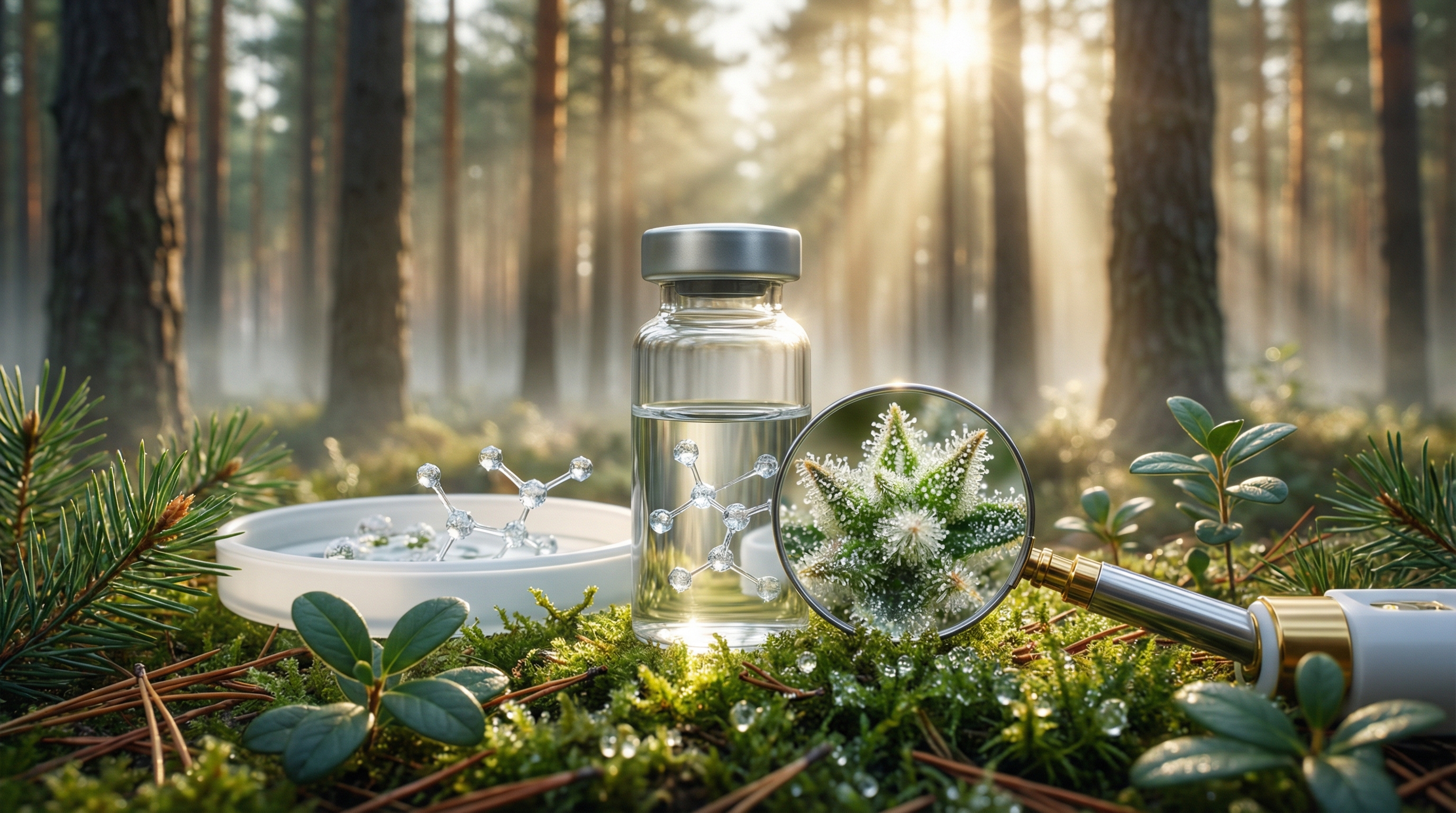
The Chemistry of Clarity
How Pinene Works in Your Brain
Alpha-pinene is a bicyclic monoterpene—a ring-shaped molecule small enough to cross the blood-brain barrier easily. Unlike THC, which binds to cannabinoid receptors, pinene targets completely different systems in your brain.
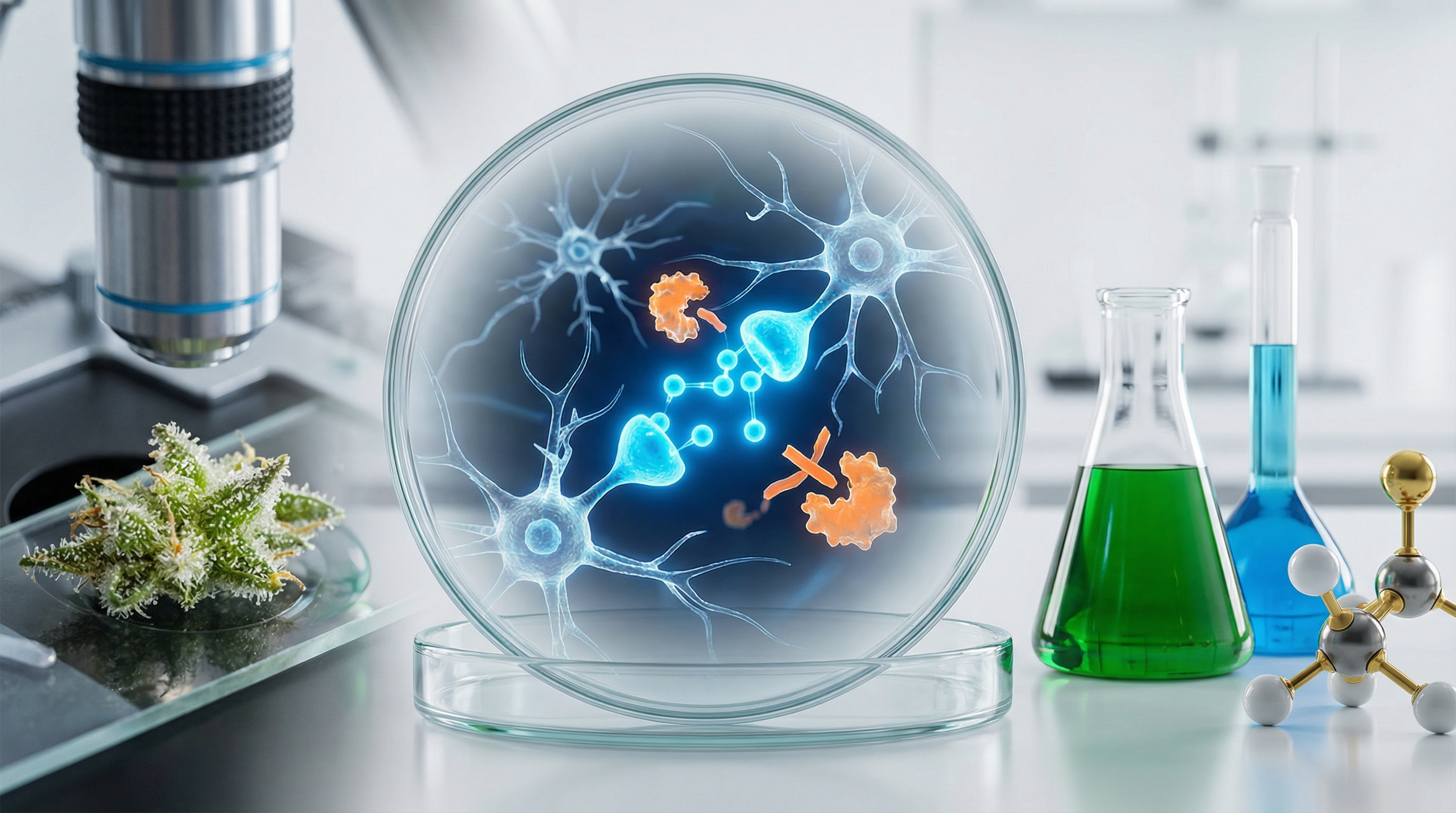
The acetylcholinesterase connection: This is pinene’s claim to fame. A study in the Journal of Agricultural and Food Chemistry found that both (+)- and (-)-alpha-pinene are potent inhibitors of acetylcholinesterase (AChE) [Perry et al., 2000]. This enzyme breaks down acetylcholine, the neurotransmitter crucial for memory, learning, and focus.
Here’s why that matters: medications like donepezil (Aricept) and rivastigmine (Exelon), prescribed to slow Alzheimer’s progression, work by the same mechanism. By blocking AChE, pinene allows acetylcholine to remain active longer in your synapses.
The nicotinic receptor pathway: A 2022 Alzheimer’s study in rats found that alpha-pinene prevented the reduction of nicotinic acetylcholine receptor α7 caused by amyloid-β proteins [Khoshnazar et al., 2022]. These receptors are essential for cognitive function, and their loss is a hallmark of dementia. Pinene appeared to protect them.
The anti-inflammatory cascade: Pinene also reduces neuroinflammation through multiple pathways:
- Decreases TNF-α and IL-1β (inflammatory cytokines)
- Suppresses the NF-κB pathway (a master switch for inflammation)
- Inhibits COX-2 and iNOS (enzymes that produce inflammatory molecules)
A 2023 study demonstrated that alpha-pinene protected rat brains from ischemia-reperfusion injury—essentially, damage from restricted blood flow—through these anti-inflammatory mechanisms [Wang et al., 2023].
The 2025 Human Trial: What Really Happened
For years, cannabis enthusiasts believed that high-pinene strains could counteract THC’s well-documented memory impairment. The theory was elegant: if THC impairs short-term memory, and pinene boosts acetylcholine, perhaps they’d balance out.
In June 2025, researchers published the first human clinical trial testing this exact hypothesis [Weerts et al., 2025]. The results were… not what many expected.
The study design: Healthy adults received either:
- THC alone (inhaled)
- Alpha-pinene alone
- THC combined with alpha-pinene
- Placebo
Researchers measured cognitive performance, working memory, and physiological effects.
The findings:
- THC alone impaired working memory (as expected)
- Co-administration of alpha-pinene with THC did not mitigate the memory impairment
- Pinene didn’t significantly alter other cognitive, subjective, or physiological effects of THC
What this means: The entourage effect isn’t a simple equation where one compound cancels another’s effects. In humans, at the doses tested, pinene didn’t act as a “memory protector” against acute THC intoxication.
The nuance: This doesn’t mean pinene has no cognitive benefits. A 2025 Master’s thesis found that full-spectrum extracts containing THC, CBD, and terpenes (including pinene) did not impair working memory at any dose tested, while isolated THC and THC:CBD extracts did [Mitchell, 2025]. The interplay may require the full chemical ensemble, not just pinene alone.
Beyond Memory: Pinene’s Other Talents
Neuroprotection Against Alzheimer’s Disease
While the acute anti-THC theory didn’t pan out, pinene’s potential for long-term brain protection remains compelling.
A January 2024 study tested twelve cannabis terpenes against amyloid-β proteins—the sticky plaques that characterize Alzheimer’s disease [Lim et al., 2024]. Both alpha-pinene and beta-pinene demonstrated:
- Significant neuroprotective effects against amyloid-β exposure
- Inhibition of fibril formation (how plaques build up)
- Reduced aggregate density in neuronal cell cultures
The researchers concluded that pinene shows “potential for medicinal cannabis formulations targeting neurodegenerative diseases.”
A 2024 study on schizophrenia models found that alpha-pinene improved cognitive impairments while reducing oxidative stress in the brain [Rashidi et al., 2024]. This suggests benefits may extend beyond Alzheimer’s to broader cognitive dysfunction.
Bronchodilator Effects
Pinene has been traditionally used for respiratory conditions, and science supports this use.
Research confirms that alpha-pinene has bronchodilator effects—it opens airways—at low exposure levels [ScienceDirect, 2025]. This makes high-pinene strains potentially beneficial for:
- Asthma management
- Exercise tolerance
- Counteracting cannabis smoke irritation
When combined with THC, pinene’s airway-opening properties may partially offset the bronchoconstrictive effects of smoking.
Antimicrobial Properties
Pinene is surprisingly effective against pathogens—including some that resist conventional antibiotics.
MRSA efficacy: An essential oil containing 34.8% pinene was equally effective as vancomycin against methicillin-resistant Staphylococcus aureus (MRSA) in one study. A 2025 study further confirmed alpha-pinene and beta-pinene as “natural adjuvants” that enhance antibiotic efficacy against MRSA [PMC, 2025].
Antibiotic enhancement: A 2015 study found that alpha-pinene decreased minimum inhibitory concentrations of antibiotics against Campylobacter jejuni by disrupting bacterial membrane integrity and inhibiting efflux pumps [Kovač et al., 2015].
Antiviral activity: Both alpha-pinene and beta-pinene inhibit infectious bronchitis virus (IBV), particularly after viral penetration of cells [Yang et al., 2011].
Anti-Inflammatory and Pain Relief
Pinene reduces inflammation through mechanisms distinct from caryophyllene’s CB2 activation:
- Suppresses iNOS, NF-κB, and COX-2 pathways
- Reduces TNF-α and IL-1β expression
- Protects against neuroinflammation in stroke models
For pain management, pinene may be most effective when combined with other cannabis compounds. Unlike myrcene, pinene doesn’t cause sedation—making it suitable for daytime use.
Finding High-Pinene Strains
What to Look For
On lab reports: Look for alpha-pinene (or α-pinene) as the dominant or co-dominant terpene. Levels above 0.2% are considered significant; some strains exceed 0.5%.
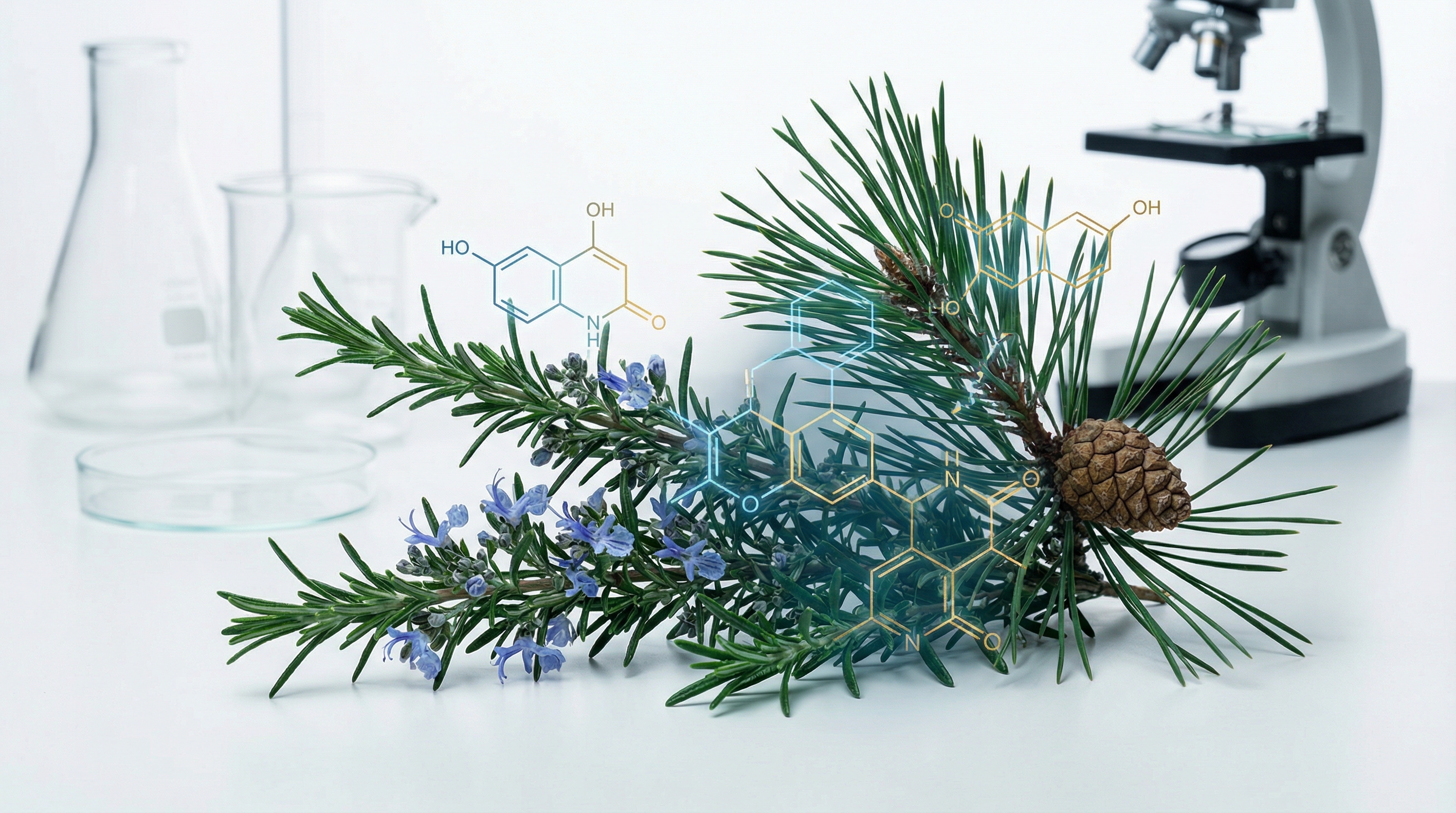
Use your nose: Pinene has a sharp, fresh, resinous scent—think pine needles, rosemary, or freshly cut Christmas trees. If a strain smells piney, herbaceous, or forest-like, pinene is likely present.
The Energy High family: At This Is Why I’m High, strains high in pinene often fall into the Energy High family, characterized by clear-headed, focused effects without heavy sedation.
Classic High-Pinene Strains
- Jack Herer - The archetype of pinene-dominant cannabis
- Blue Dream - Pinene balances its myrcene content
- Dutch Treat - Sharp pine with subtle sweetness
- Romulan - High pinene despite indica genetics
- Strawberry Cough - Pinene contributes to its unique berry-pine profile
- Island Sweet Skunk - Energizing pinene-forward sativa
- Trainwreck - Complex terpene profile with strong pinene
When Pinene Is Right for You
Pinene-rich strains may be ideal for:
- Daytime productivity when you need to stay sharp
- Creative work requiring focus and clarity
- Social situations where mental engagement matters
- Physical activity (bronchodilator effects)
- Respiratory sensitivity to smoke
Consider other terpene profiles when:
- Deep relaxation or sleep is the goal (try myrcene-dominant strains)
- Mood elevation is primary (limonene may be better)
- Physical pain needs direct management (caryophyllene + myrcene)
- Calm and anxiety relief is needed (linalool excels here)
The Entourage Effect: Pinene in Context
Pinene doesn’t work in isolation. Its effects shift depending on what it’s paired with.
With THC: Pinene may help preserve alertness and counteract some of THC’s foggy effects—though the 2025 study shows this isn’t as simple as hoped. The combination tends to produce a more clear-headed high than THC with myrcene.
With limonene: Both terpenes have uplifting, energizing properties. Together, they create what many describe as a focused, optimistic state. This pairing is common in daytime sativas.
With caryophyllene: An interesting balance—caryophyllene’s anti-inflammatory CB2 effects combined with pinene’s acetylcholinesterase inhibition. Strains with both may offer pain relief without cognitive dulling.
With myrcene: These terpenes often compete. High myrcene tends to dominate with sedation, while high pinene tends to keep things alert. The ratio matters—look for strains where pinene edges out myrcene if you want clarity.
Understanding these interactions is central to the entourage effect—the synergy between cannabis compounds that determines your experience.

Key Takeaways
Pinene works like Alzheimer’s medications. By inhibiting acetylcholinesterase, pinene allows acetylcholine—your memory and focus neurotransmitter—to work longer. This is a genuine, studied mechanism.
The 2025 human trial challenged assumptions. Alpha-pinene alone didn’t protect against THC’s acute memory impairment in healthy adults. The entourage effect is more complex than “terpene cancels THC side effect.”
Long-term neuroprotection looks promising. Pinene protects neurons from amyloid-β damage, reduces neuroinflammation, and preserves nicotinic receptors. Its Alzheimer’s prevention potential is being actively researched.
Pinene opens airways. Bronchodilator effects make it potentially beneficial for respiratory concerns and may partially offset smoke irritation.
Context determines utility. Pinene is ideal for daytime use, focus, and alertness. It’s not the terpene for deep sedation or couch-lock.
Full-spectrum may be the key. The 2025 thesis finding that full-spectrum extracts don’t impair memory—unlike isolated THC—suggests the entire chemical ensemble matters, not just one protective terpene.
Sources
Perry, N.S.L., et al. (2000). “In-vitro inhibition of human erythrocyte acetylcholinesterase by Salvia lavandulaefolia essential oil and constituent terpenes.” Journal of Pharmacy and Pharmacology, 52(7), 895-902.
Khoshnazar, M., et al. (2022). “Neuroprotective effect of alpha-pinene is mediated by suppression of the TNF-α/NF-κB pathway in Alzheimer’s disease rat model.” Journal of Molecular Biology Reports, 49, 4567-4576. [PubMed: 35174932]
Weerts, E.M., et al. (2025). “The Individual and Interactive Effects of Alpha-Pinene and Delta-9-Tetrahydrocannabinol in Healthy Adults.” Medicinal Cannabis and Cannabinoids. [PubMed: 40734690]
Mitchell, L. (2025). “Terpenes Mitigate THC-Induced Working Memory Deficits: Behavioural Evidence of the Entourage Effect.” Master’s Thesis, Wilfrid Laurier University.
Lim, K., et al. (2024). “Characterizing cannabis-prevalent terpenes for neuroprotection reveal a role for α and β-pinenes in mitigating amyloid β-evoked neurotoxicity and aggregation in vitro.” Neurotoxicology, 100, 16-26.
Wang, Y., et al. (2023). “Alpha-pinene exerts neuroprotective effects via anti-inflammatory and anti-apoptotic mechanisms in a rat model of focal cerebral ischemia-reperfusion.” Acta Neurochirurgica. [PubMed: 32689608]
Rashidi, R., et al. (2024). “Neuroprotective effects of alpha-pinene against behavioral deficits in ketamine-induced mice model of schizophrenia: Focusing on oxidative stress status.” Psychopharmacology. [ScienceDirect]
Kovač, J., et al. (2015). “Antibiotic Resistance Modulation and Modes of Action of (-)-α-Pinene in Campylobacter jejuni.” PLOS ONE, 10(4), e0122871.
Yang, Z., et al. (2011). “Comparative Anti-Infectious Bronchitis Virus (IBV) Activity of (-)-Pinene: Effect on Nucleocapsid (N) Protein.” Molecules, 16(2), 1044-1054. [PMC6259611]
Russo, E.B. (2011). “Taming THC: potential cannabis synergy and phytocannabinoid-terpenoid entourage effects.” British Journal of Pharmacology, 163(7), 1344-1364.