

Terpinolene: The Rare Terpene for Energy and Creativity
Why terpinolene strains like Jack Herer deliver clear-headed, creative energy. Science-backed research on CB receptors and anticancer potential.

Professor High
The Terpene That Defies Expectations
Here’s a paradox: terpinolene is one of the rarest dominant terpenes in cannabis, yet it defines some of the most legendary strains ever bred. Jack Herer. Ghost Train Haze. Dutch Treat. Golden Pineapple.
What makes these strains special? They deliver something most cannabis doesn’t—clear-headed, creative energy without the sedation that dominates the market.
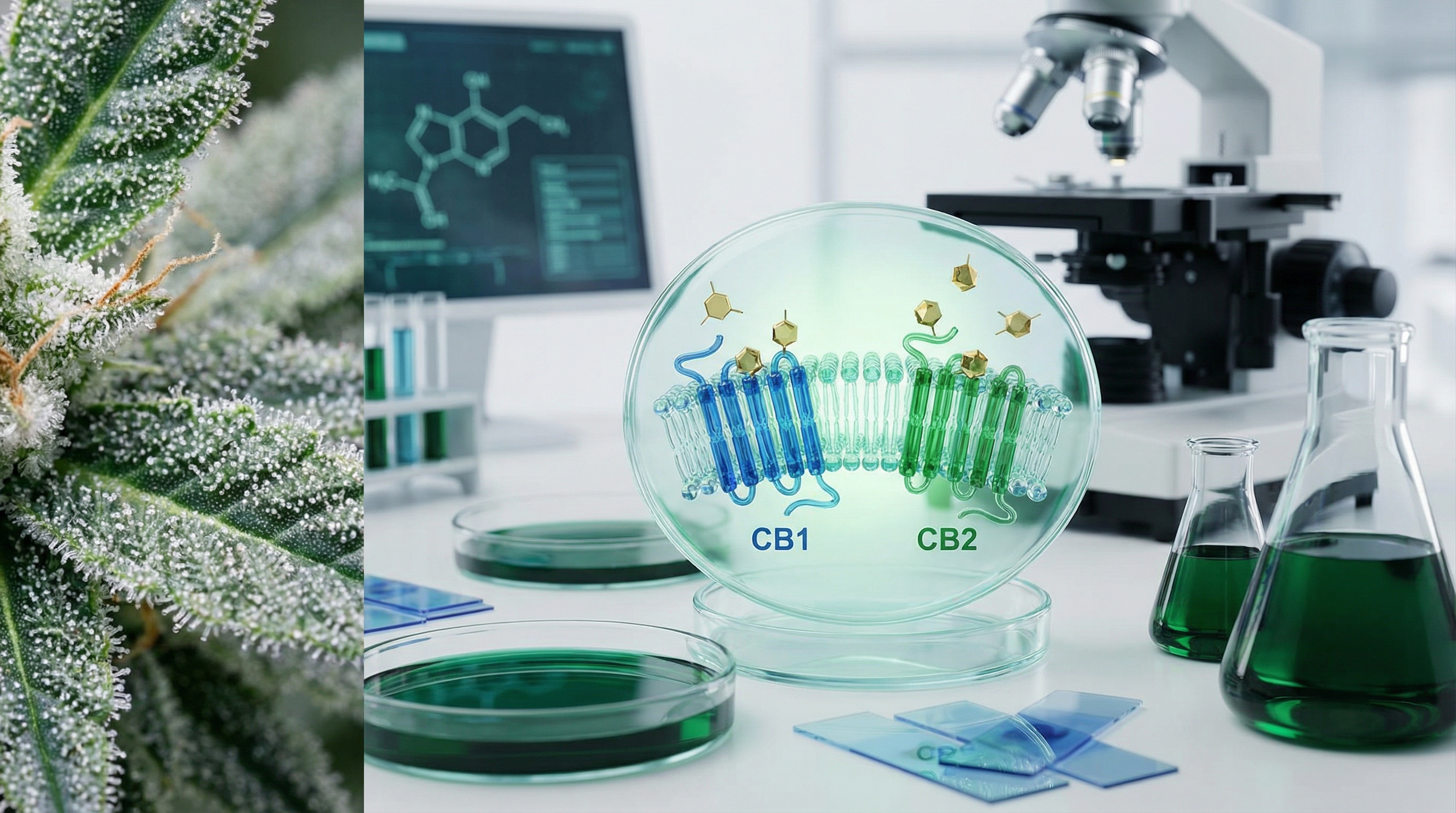
Terpinolene is the molecule responsible. And in 2025, breakthrough research revealed it does something remarkable: it activates cannabinoid receptors directly, acting as a partial agonist at both CB1 and CB2—something scientists didn’t expect from a terpene.
In this guide, we’ll explore why terpinolene is the black sheep of cannabis terpenes, the cutting-edge receptor research, and why strains with this rare profile might be exactly what you’ve been looking for.

Why Terpinolene Is Different
The Rarest Dominant Terpene
Let’s put this in perspective. When researchers at Leafly analyzed over 90,000 cannabis samples, terpinolene was the dominant terpene in only about 11% of strains [Leafly, 2019]. Compare that to myrcene, which dominates roughly 40% of the market.
This rarity isn’t random. Terpinolene-dominant strains require specific genetics that trace back to heirloom sativas and their descendants. The chemical pathway that produces high terpinolene tends to come at the expense of myrcene production—which is why terpinolene strains feel so different.
A Complex Sensory Profile
The first thing you’ll notice about terpinolene-dominant cannabis is the aroma. It’s not straightforward like the citrus punch of limonene or the earthy musk of myrcene.
Terpinolene is layered. A 2025 study in PLOS One found it was the only compound consistently associated with both citrus and chemical sensory descriptors [Smith et al., 2025]. Users often describe it as:
- Piney and woody (like fresh-cut wood)
- Floral and herbaceous (like lilac or rosemary)
- Slightly sweet and citrusy (like unripe fruit)
This complexity hints at how terpinolene interacts differently with your olfactory system—and, as we’ll see, with your cannabinoid receptors.
The Science: Direct Cannabinoid Receptor Activation
A 2025 Breakthrough
For years, scientists believed terpenes only worked indirectly—enhancing or modulating the effects of cannabinoids like THC. A landmark study published in Biochemical Pharmacology in November 2025 changed that understanding [John Hopkins/University of Arizona, 2025].
Researchers tested sixteen cannabis terpenes against CB1 and CB2 receptors. The results were striking:
Terpinolene acts as a partial agonist at both CB1 and CB2 receptors.
What does “partial agonist” mean? It means terpinolene directly activates these receptors—the same ones THC targets—but at a fraction of the intensity. The study found terpenes achieved 10-60% of the maximal response that THC produces.
Why CB2 Activation Matters
Here’s the interesting part: CB2 activation doesn’t get you high. CB2 receptors are concentrated in your immune system and peripheral tissues, not your brain. Activating them provides:
- Anti-inflammatory effects without cognitive impairment
- Neuroprotective benefits (protecting nerve cells from damage)
- Cardioprotective effects (supporting heart health)
This helps explain why terpinolene-dominant strains can feel uplifting without being overwhelming. You’re getting partial cannabinoid receptor activation distributed throughout your body, not concentrated in the brain regions that produce intoxication.
Enhanced Symptom Relief
A 2023 study in the Journal of Cannabis Research found something practical: cannabis flower with elevated terpinolene and myrcene levels was associated with greater perceived symptom relief among medical patients [Stith et al., 2023].
This suggests terpinolene isn’t just about subjective experience—it may genuinely enhance the therapeutic effects of cannabis through direct receptor engagement.
Anticancer Properties: Promising Early Research
One of the most exciting areas of terpinolene research involves its anticancer potential. While this research is still in early stages (mostly cell studies, not human trials), the findings are compelling enough to warrant attention.
Brain Tumor Cells
A 2013 study published in Archives of Industrial Hygiene and Toxicology tested terpinolene against N2a neuroblastoma cells (a type of brain tumor cell line) [Aydin et al., 2013].
Key findings:
- Terpinolene showed significant antiproliferative effects (stopping cancer cell growth)
- At lower concentrations (10-50 mg/L), it increased antioxidant capacity in healthy neurons
- At higher concentrations, it selectively damaged cancer cells while showing less toxicity to healthy cells
The researchers concluded: “TPO [terpinolene] may have potential as an anticancer agent for brain tumours.”
Breast Cancer Cells
A 2021 study in Biologia examined terpinolene’s effects on MCF-7 breast cancer cells and found it induced cell death through oxidative stress mechanisms [Kucuk et al., 2021].
More importantly, terpinolene showed better selectivity than cisplatin (a standard chemotherapy drug)—meaning it was more precise in targeting cancer cells while sparing healthy ones.

The NF-κB Connection
How might terpinolene fight cancer? Research on related terpenoids suggests a key mechanism: inhibition of NF-κB signaling [Salminen et al., 2008].
NF-κB is a protein complex that, when overactivated, promotes inflammation and tumor growth. By suppressing this pathway, terpenoids like terpinolene may exert both anti-inflammatory and anti-tumor effects simultaneously.
Important caveat: This research is preclinical. We’re not suggesting cannabis treats cancer. But understanding these mechanisms helps explain why terpinolene might contribute to the overall therapeutic profile of cannabis.
The Uplifting Effect: What Users Report
Now let’s get practical. What do people actually experience with terpinolene-dominant strains?
Jack Herer: The Flagship Strain
Jack Herer is the most famous terpinolene-dominant strain, and its terpene profile tells the story. Lab testing shows terpinolene can comprise 34-36% of the total terpene fraction—an unusually high dominance for any single terpene [Abstrax Tech, 2024].
Users consistently describe Jack Herer as:
- Energizing without anxiety (unlike some high-THC sativas)
- Creative and cerebral (enhanced divergent thinking)
- Clear-headed (no foggy, sedated feeling)
- Physically relaxing (without couch-lock)
This profile—mental stimulation with physical ease—is the signature of terpinolene dominance.
Other High-Terpinolene Strains
If you respond well to Jack Herer, seek out these related strains:
| Strain | Terpinolene Notes |
|---|---|
| Ghost Train Haze | Intense cerebral effects, often tests highest in terpinolene |
| Golden Pineapple | Sweet, tropical profile with strong uplifting effects |
| Dutch Treat | Amsterdam classic with piney, sweet character |
| XJ-13 | Jack Herer x G13 cross, balanced uplift |
| Chernobyl | Lime-forward terpinolene variant |
| Tangie | Citrus-dominant with terpinolene secondary |
These strains share common genetic ancestry that expresses high terpinolene production—and they share that distinctive energetic quality.

Terpinolene and the Entourage Effect
Synergy with THC
The 2025 receptor study revealed something important about how terpenes work with cannabinoids. Because terpinolene directly activates CB1 and CB2 receptors (even partially), it may prime the system for THC’s effects.
Think of it like this: terpinolene gently activates 10-60% of receptor capacity. When THC arrives, it builds on that foundation rather than starting from zero. This could explain why:
- Terpinolene strains feel more potent than THC percentage alone suggests
- The effects come on smoother (gradual onset vs. sudden peak)
- Users report more controllable experiences
Interaction with Other Terpenes
Terpinolene-dominant strains typically have secondary terpenes that shape the overall experience:
With Pinene: Enhanced alertness and memory preservation. Jack Herer often has significant pinene, which may counteract any THC-induced short-term memory impairment.
With Limonene: Elevated mood and reduced anxiety. Strains like Tangie combine terpinolene with limonene for an especially euphoric profile.
With Caryophyllene: Added anti-inflammatory benefits. Since caryophyllene also activates CB2 receptors, the combination amplifies peripheral anti-inflammatory effects.
When Terpinolene Might Be Right for You
Consider Terpinolene Strains If You:
- Want energy without anxiety — Terpinolene’s partial CB2 activation provides uplift without overstimulation
- Need creative inspiration — The cerebral effects support divergent thinking and artistic flow
- Dislike sedation — Terpinolene is essentially the anti-myrcene; it won’t put you on the couch
- Work during the day — Many users find terpinolene strains functional for tasks requiring mental engagement
- Have tried sativas that felt too racy — The smooth onset from partial agonism creates a gentler experience
Be Cautious If You:
- Need sleep support — Terpinolene is energizing; it’s not your bedtime strain
- Are sensitive to cerebral effects — The mental stimulation can feel intense for some users
- Prefer body-heavy relaxation — Look to myrcene-dominant strains instead
How to Find High-Terpinolene Products
Lab Testing Is Essential
Because terpinolene dominance is rare, you can’t rely on strain names alone. The same strain name can have completely different terpene profiles depending on how it was grown, when it was harvested, and how it was cured.
Always check the lab report. Look for:
- Terpinolene as the dominant terpene (should be the highest percentage)
- Total terpinolene above 0.5% (significant presence)
- Low myrcene relative to terpinolene (ensures the uplifting character)
Ask Your Budtender
Few budtenders know about terpinolene specifically, but you can frame it this way:
“I’m looking for something energizing and creative, not sedating. Something like Jack Herer. Can you show me what’s testing high in terpinolene?”
If they can pull up lab results, even better. If not, Jack Herer and its genetic relatives are your safest bet.
The Bottom Line
Terpinolene is cannabis’s hidden gem—rare, complex, and scientifically fascinating.
The 2025 discovery that it directly activates cannabinoid receptors rewrites our understanding of how terpenes contribute to the cannabis experience. It’s not just about smell. Terpinolene is pharmacologically active, contributing to effects, potentially enhancing therapeutic benefits, and maybe even fighting cancer cells (in a petri dish, at least).
If you’ve been chasing that elusive “uplifting sativa” feeling and keep getting strains that make you sleepy instead, terpinolene is likely what you’ve been missing. Seek out Jack Herer, Ghost Train Haze, or Dutch Treat. Check the lab results. And experience what the rarest dominant terpene has to offer.
The strain matters—but the terpene profile matters more. Terpinolene might just become your new favorite.
Key Takeaways
- Terpinolene is the rarest dominant terpene, appearing in only ~11% of strains
- 2025 research proves terpinolene directly activates CB1 and CB2 receptors as a partial agonist
- CB2 activation provides anti-inflammatory and neuroprotective benefits without intoxication
- Anticancer research shows promising results in cell studies (brain tumors, breast cancer)
- Jack Herer is the flagship terpinolene strain, with 34-36% terpinolene dominance
- Seek lab-tested products to ensure genuine terpinolene dominance
Sources
- Aydin E, Türkez H, Taşdemir Ş. “Anticancer and antioxidant properties of terpinolene in rat brain cells.” Archives of Industrial Hygiene and Toxicology. 2013.
- Biochemical Pharmacology. “Cannabis terpenes act as partial agonists at CB1 and CB2 receptors.” November 2025.
- Kucuk M, et al. “Selective and oxidative stress-mediated cell death of MCF-7 cell line induced by terpinolene.” Biologia. 2021.
- Leafly. “The Cannabis Terpenes Research Project.” 2019.
- PLOS One. “Beyond potency: A proposed lexicon for sensory differentiation of Cannabis sativa L. aroma.” October 2025.
- Salminen A, et al. “Terpenoids: natural inhibitors of NF-κB signaling with anti-inflammatory and anticancer potential.” Cellular and Molecular Life Sciences. 2008.
- Stith S, et al. “The effect of terpene profiles on symptom relief.” Journal of Cannabis Research. 2023.