

Why Edibles Hit Harder: The Science of 11-OH-THC
Discover why cannabis edibles produce stronger, longer effects than smoking. Learn about 11-OH-THC metabolism and safe dosing tips.

Professor High
Your friendly cannabis educator, bringing science-backed knowledge to the community.
Everyone who’s tried edibles has a story. Maybe yours involves waiting an hour, deciding “this isn’t working,” eating another gummy, and then experiencing a 6-hour journey you didn’t plan for. Or perhaps a friend warned you that “edibles hit different” before you understood what that actually meant.
Here’s the thing: edibles don’t just feel different because they’re slower—they literally create a different, more potent cannabinoid that smoking never produces. Your liver transforms regular THC into something called 11-OH-THC, and understanding this metabolic magic trick is the key to finally making sense of edibles.
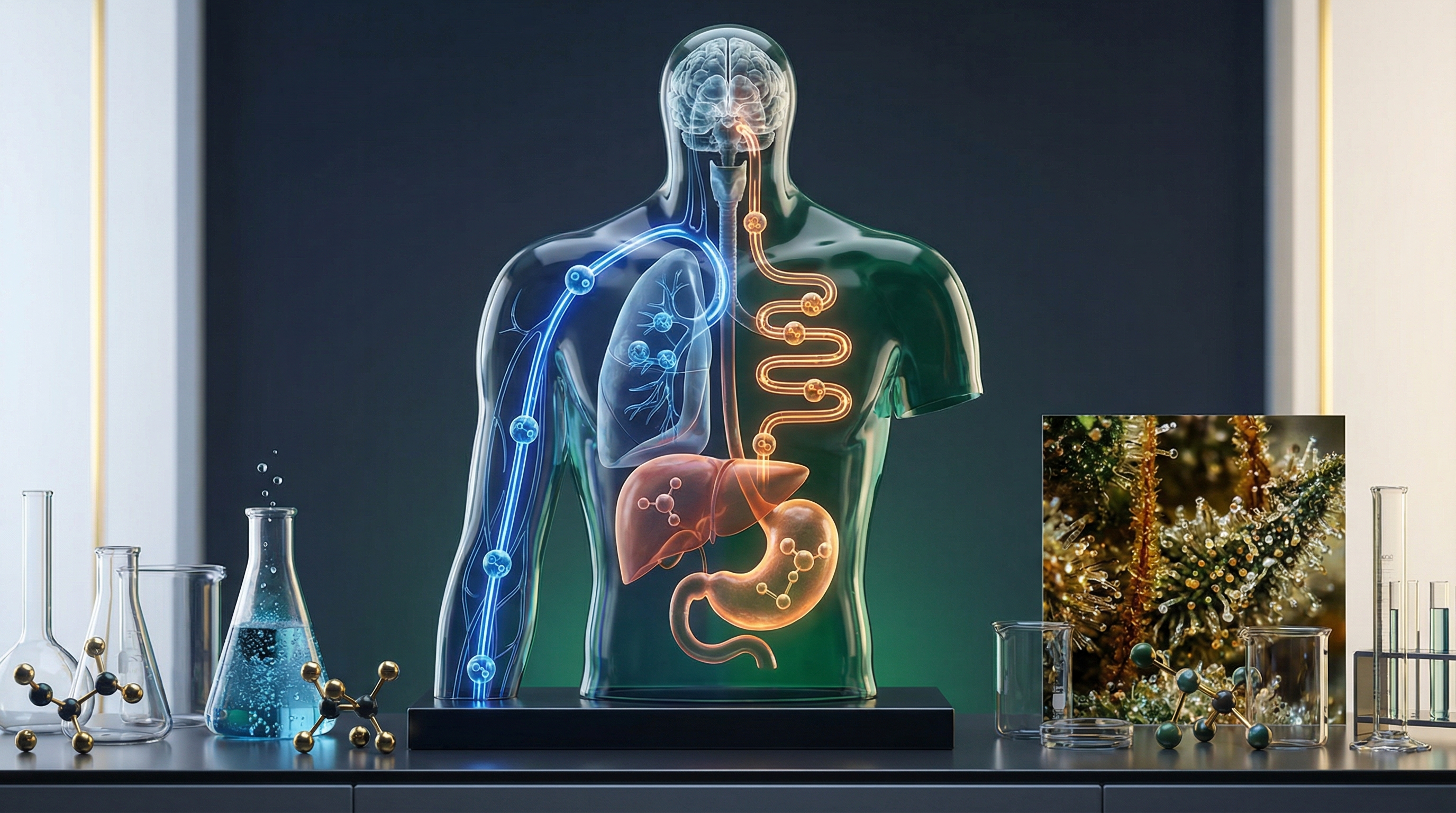
🫁 The Journey: Smoking vs. Eating
When you smoke or vape cannabis, THC enters your lungs and crosses directly into your bloodstream within seconds. From there, it travels straight to your brain and binds to CB1 receptors—the ones responsible for that familiar high. Peak effects hit within 15-30 minutes, and the whole experience typically wraps up in 1-3 hours.
Simple, fast, predictable.
But when you eat cannabis, everything changes. THC enters your stomach, gets absorbed through your intestinal walls, and travels to your liver via the portal vein—before it ever reaches your brain. This is called first-pass metabolism, and it’s where the real transformation happens.
Your liver isn’t just a waypoint. It’s a cannabinoid upgrade station.
| Route | Onset | Peak Effects | Duration | Bioavailability |
|---|---|---|---|---|
| Smoking/Vaping | 1-3 minutes | 15-30 minutes | 1-3 hours | 10-35% |
| Edibles | 30-90 minutes | 2-4 hours | 4-8+ hours | 4-12% |
Wait—edibles have lower bioavailability but feel stronger? That paradox is exactly why 11-OH-THC matters.
🧬 Meet 11-OH-THC: Your Liver’s Creation
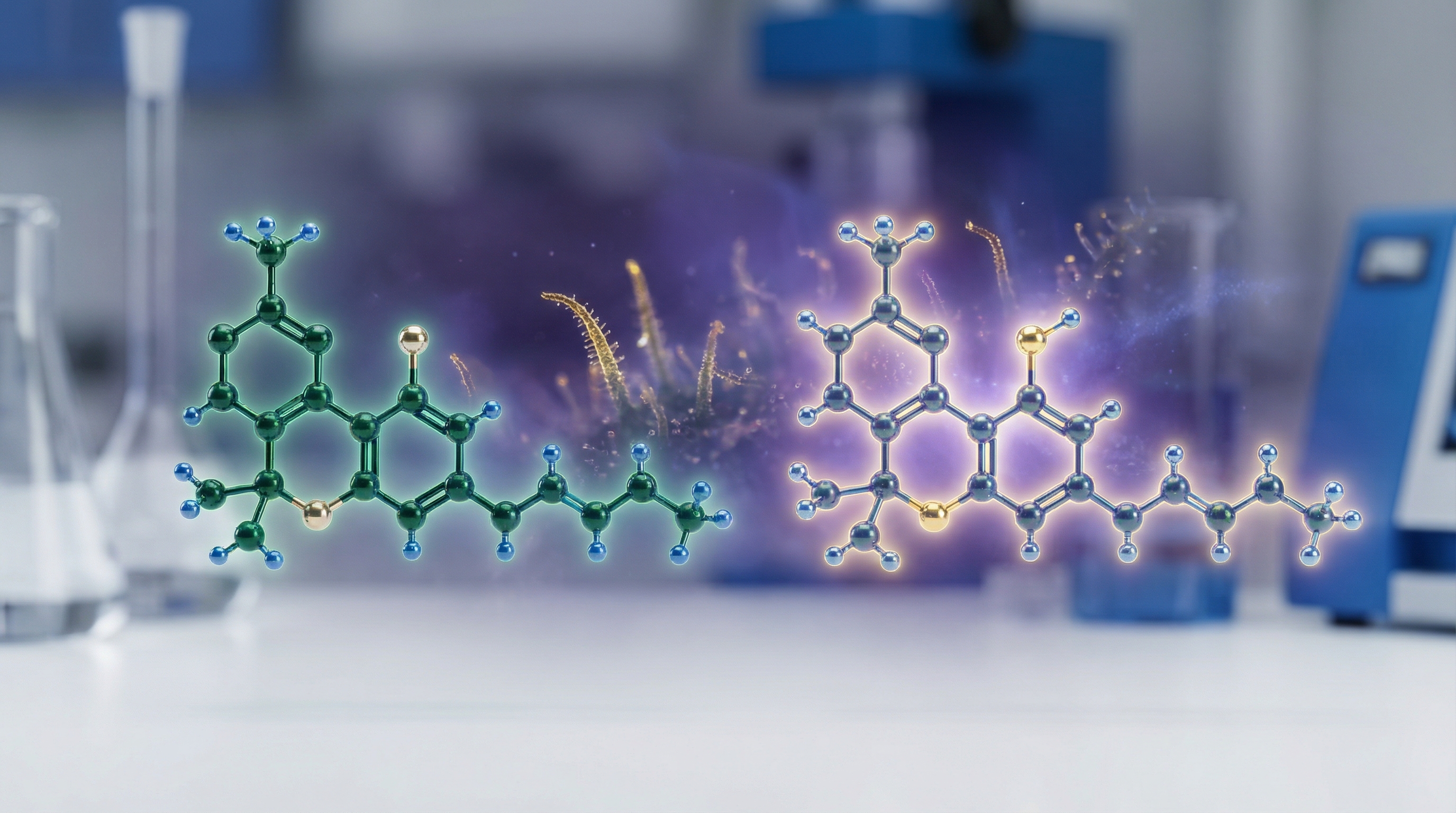
When THC reaches your liver, two key enzymes—CYP2C9 and CYP3A4—get to work. They add a hydroxyl group (-OH) to the THC molecule at the 11-carbon position, creating 11-hydroxy-delta-9-tetrahydrocannabinol, or 11-OH-THC for short.
This isn’t just a small change. Research in Drug Metabolism and Disposition [Patton et al., 2019] shows that CYP2C9 does most of the work, with CYP3A4 helping out. When you eat cannabis, your blood ends up with much more 11-OH-THC than when you smoke. Why? Because smoking skips the liver entirely.
Why This Metabolite Matters
11-OH-THC isn’t just “processed THC”—it’s a distinct psychoactive compound with its own properties:
- Crosses the blood-brain barrier more efficiently than delta-9-THC
- Binds to CB1 receptors with similar or greater affinity
- Produces more intense body effects and often feels more sedating
- Only forms in significant amounts through oral consumption
This is why the same person can smoke a joint and feel fine, then eat 10mg of THC and feel like they’re on a different planet. The experience isn’t just “more”—it’s qualitatively different because you’re experiencing a different cannabinoid.
If you’re new to cannabis and want to understand how these receptors work, check out our complete guide to the endocannabinoid system.
🧠 Why 11-OH-THC Is More Potent
The potency difference between delta-9-THC and 11-OH-THC comes down to three factors:
1. Blood-Brain Barrier Penetration
The extra -OH group makes 11-OH-THC more polar. Surprisingly, this helps it cross into your brain faster and more easily. Research on cannabinoid pharmacokinetics [Huestis, 2007] confirms that 11-OH-THC reaches brain tissue quicker than regular THC.
2. Receptor Binding Affinity
Studies indicate that 11-OH-THC binds to CB1 receptors with at least equal—and possibly greater—affinity compared to delta-9-THC. This translates to a more pronounced psychoactive effect per molecule.
3. Individual Genetic Variation
Here’s where edibles get unpredictable: your CYP2C9 enzyme levels depend on your genes. Research in the British Journal of Clinical Pharmacology [Lucas et al., 2018] found that “poor metabolizers” can have THC levels 3x higher than “fast metabolizers.”
This explains a lot. Your friend eats 20mg and feels fine. You eat 5mg and can’t move. It’s not just tolerance—it’s your liver’s unique chemistry.
⏱️ The Timeline: Why Edibles Take So Long
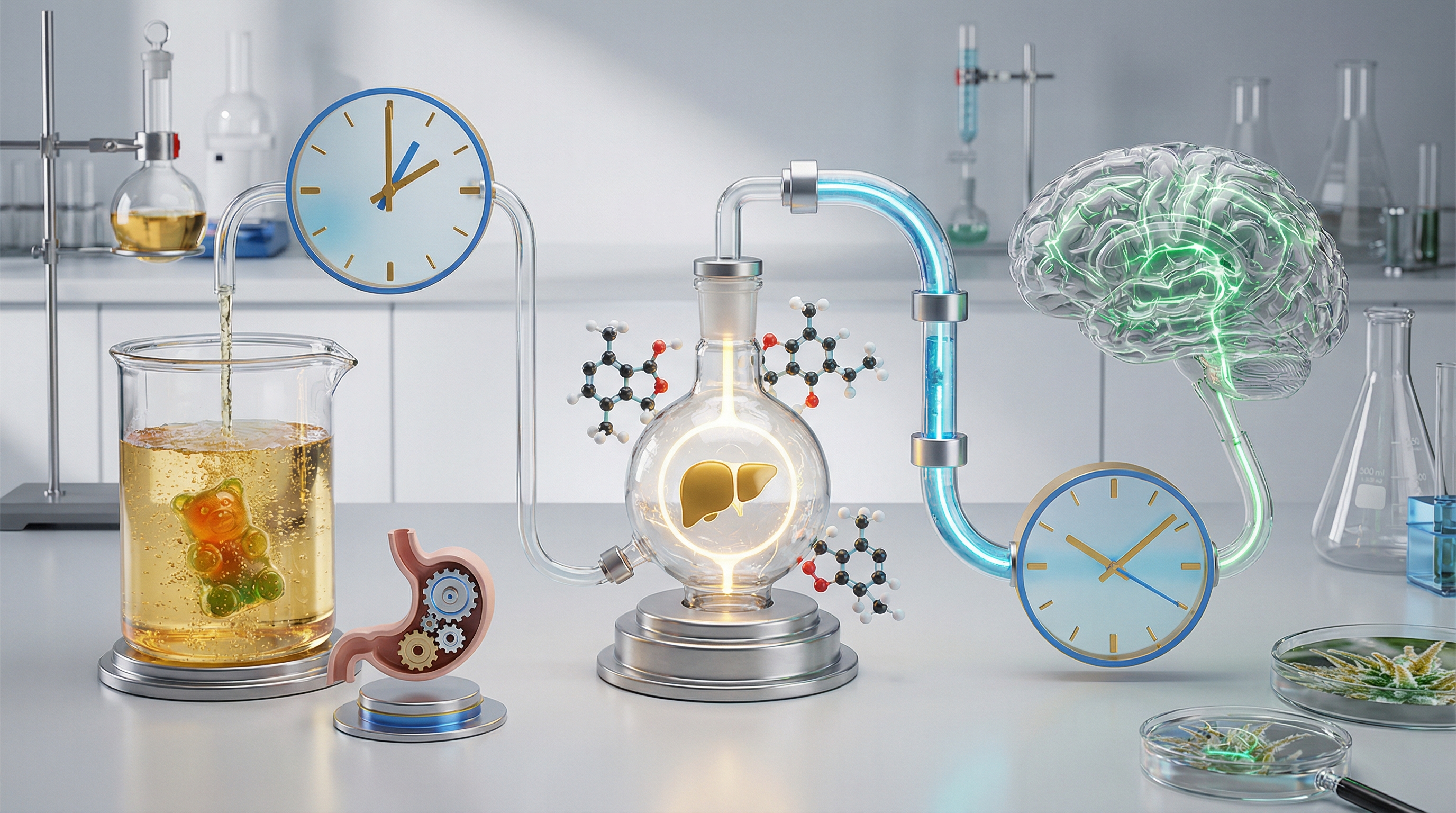
If you’ve ever impatiently eaten a second edible because “the first one isn’t working,” you’ve learned this lesson the hard way. The delay isn’t random—it’s metabolic reality.
The Digestion Pipeline
- Stomach (15-45 minutes): THC must be released from the food matrix and survive stomach acid
- Intestinal absorption (20-60 minutes): Cannabinoids are fat-soluble and need bile for proper absorption
- First-pass metabolism (variable): Your liver converts THC to 11-OH-THC
- Distribution (15-30 minutes): 11-OH-THC travels to your brain via bloodstream
Factors That Affect Onset
| Factor | Effect on Onset | Why |
|---|---|---|
| Empty stomach | Faster (but potentially more intense) | Less digestive competition |
| Fatty meal | Slower but smoother | Better absorption, more consistent effects |
| Individual metabolism | Highly variable | CYP enzyme expression differs genetically |
| Edible type | Sublingual faster than swallowed | Bypasses some first-pass metabolism |
The British Columbia government’s cannabis safety guidelines recommend waiting at least 2 hours before considering a second dose—and that’s not overly cautious. Effects can take up to 4 hours to fully peak.
🕐 The Duration: Why Effects Last 4-8+ Hours
Once 11-OH-THC reaches your brain, it doesn’t leave quickly. Several factors contribute to the extended duration:
Half-Life Differences
11-OH-THC has a longer half-life than delta-9-THC. Pharmacokinetic studies show that oral THC and its metabolites remain detectable in plasma for much longer than after smoking.
Fat-Soluble Storage
Cannabinoids are lipophilic (fat-loving), meaning they get absorbed into fatty tissues and release slowly over time. This creates a sustained-release effect that keeps 11-OH-THC circulating for hours.
Comparison by Method
| Method | Typical Duration | Peak Effects | Offset |
|---|---|---|---|
| Smoking | 1-3 hours | 20-30 min | Quick, clean |
| Vaping | 2-4 hours | 30-60 min | Moderate |
| Sublingual | 4-6 hours | ~90 min | Gradual |
| Edibles | 4-8+ hours | 2-4 hours | Very gradual |
For those using edibles for sleep, this duration is a feature, not a bug. But for daytime use, timing matters—an edible at 6 PM might still have residual effects at midnight.
💊 Dosing: Why 5mg Eaten ≠ 5mg Smoked
Here’s the math that trips people up: edibles have 4-12% bioavailability compared to 10-35% for smoking. By that logic, you’d need more THC orally to get the same effect.
But 11-OH-THC changes the equation entirely.
The conversion to a more potent metabolite means that 5mg of THC eaten can feel like 15-25mg smoked for some people. The Colorado Cannabis Safety Guidelines set the standard serving at 10mg THC—but that’s designed for people with some tolerance.
Evidence-Based Dosing Chart
| Dose (THC) | Experience Level | Expected Effects |
|---|---|---|
| 1-2.5mg | Complete beginners | Subtle, minimal impairment |
| 2.5-5mg | Low tolerance | Mild euphoria, relaxation |
| 5-10mg | Moderate tolerance | Noticeable psychoactive effects |
| 10-20mg | Regular users | Strong effects, significant impairment |
| 20mg+ | High tolerance only | Intense, long-lasting experience |
WebMD’s edibles safety guide recommends beginners start with no more than 2.5mg THC—and I agree. You can always take more next time; you can’t un-eat a gummy.
For those interested in functional, low-dose consumption, our microdosing guide covers protocols starting at 1-2.5mg.
The Golden Rules
- Start with 2.5-5mg maximum for your first time
- Wait 2 FULL hours before considering more—not 45 minutes, not “when you feel ready”
- Take with food (preferably something fatty) for more consistent absorption
- Have CBD on hand—it can help moderate intensity if things get overwhelming. Learn more in our THC vs CBD guide
❓ Frequently Asked Questions
Why do edibles feel stronger than smoking?
Your liver converts delta-9-THC into 11-hydroxy-THC (11-OH-THC), a metabolite that crosses the blood-brain barrier more effectively and binds to CB1 receptors with at least equal potency. This only happens with oral consumption because smoked/vaped THC bypasses the liver.
What is 11-OH-THC?
11-hydroxy-THC is the primary active metabolite of THC, created when liver enzymes (mainly CYP2C9 and CYP3A4) add a hydroxyl group to the THC molecule. It’s more psychoactive than regular THC and is the main reason edibles produce a distinct, often more intense experience.
How long does it take for edibles to kick in?
Typically 30-90 minutes, but effects can take up to 2 hours to begin and 4 hours to fully peak. Onset depends on stomach contents, metabolism, and the specific product. Always wait at least 2 hours before taking more.
Why do edibles last so long?
11-OH-THC has a longer half-life than delta-9-THC, and fat-soluble cannabinoids release slowly from body tissues. Effects typically last 4-8 hours, with some residual effects lasting up to 12 hours.
Can I speed up edible onset?
Sublingual products (held under tongue) absorb faster by partially bypassing liver metabolism. Taking edibles with a fatty snack can improve absorption consistency. However, there’s no safe way to dramatically speed up traditional edibles—the liver takes the time it takes.
What should I do if I took too much?
Stay calm—no one has ever died from a cannabis overdose. CBD can help reduce the intensity. Drink water, find a comfy spot, put on familiar music or a show, and remember: this will pass. Most uncomfortable experiences peak around 2-4 hours, then slowly fade.
Key Takeaways
Edibles hit harder because of 11-OH-THC—your liver converts regular THC into a more potent metabolite that only forms through oral consumption
The slow onset is metabolic, not mysterious—THC must be digested, absorbed, and processed by your liver before reaching your brain (30-90+ minutes minimum)
Effects last 4-8+ hours because 11-OH-THC has a longer half-life and cannabinoids release slowly from fatty tissues
Dosing is NOT comparable to smoking—5mg eaten can feel like 15-25mg smoked due to the 11-OH-THC conversion
The 2-hour rule saves people every time—most “bad edible experiences” happen because someone took more after 45 minutes instead of waiting
Individual variation is real—genetic differences in CYP2C9 enzyme expression mean edibles affect everyone differently. Start low, learn your response
📚 Continue Your Education
Understanding edible metabolism is just one piece of the cannabis science puzzle:
- Learn how THC and 11-OH-THC interact with your body in our endocannabinoid system guide
- Discover why whole-plant products work differently than isolates: The Entourage Effect
- New to cannabis entirely? Start with our complete beginner’s guide
- Looking for evening-appropriate options? Browse strains in the Relaxing High family or Balance High family for gentler experiences
- Interested in terpenes that may enhance absorption? Learn about myrcene, the most abundant terpene in cannabis
Sources
Huestis MA. “Human Cannabinoid Pharmacokinetics.” Chemistry & Biodiversity. 2007. PMC2689518
Patton AL, et al. “Quantifying Hepatic Enzyme Kinetics of THC and 11-OH-THC.” Drug Metabolism and Disposition. 2019. dmd.aspetjournals.org
Schwilke EW, et al. “THC, 11-OH-THC Plasma Pharmacokinetics during Oral THC.” Clinical Chemistry. 2009. PMC3196989
Lucas CJ, et al. “The pharmacokinetics and pharmacodynamics of cannabinoids.” British Journal of Clinical Pharmacology. 2018. bpspubs.onlinelibrary.wiley.com
Vandrey R, et al. “Pharmacokinetics of Cannabis Brownies.” Journal of Analytical Toxicology. 2020. PMC7549129
Colorado Department of Revenue. “Safety with Edibles.” cannabis.colorado.gov
Have questions about edibles or your own experiences with 11-OH-THC? The science is clear, but everyone’s liver tells a different story. Start low, go slow, and track what works for you.